General Petraeus doesn’t want to paint this better or worse than it is. December was the height of the ethno-sectarian violence. So we’re comparing the worst possible month with the current situation, and it has dropped dramatically, which was the intent of the surge, to stop the over-all killings, and ethno-sectarian violence is down even more. In other words, all civilian casualties and all civilian deaths are down 17 percent and 48 percent, respectively.
Readers of The Shadowland Journal entry, "The Surge, the Sun and the Sand," or of Newsweek International's "Why It Matters" blog will recall that these kinds of changes tend to be cyclical and heavily affected by the weather. You'd think with all the "metrics" that Petraeus has pulled together, he'd know that. Actually, I think he does. He just figures you don't. - C.S.Friday, September 07, 2007
Petraeus: The Temperature's Rising
Came across this interesting remark by Col. Michael J. Meese, one of Gen. David Petraeus's "Dream Team" in Iraq, interviewed for the Council on Foreign Relations Web site:


Thursday, September 06, 2007
The Orwell Files
It seems Big Brother was watching George Orwell. The relevant documents from MI5 and MI6 have just been released by the British National Archives . Click through and you can download very good copies of the originals for free.


George Orwell (KV 2/2699)
This slim Security Service file on journalist and author Eric Blair, alias George Orwell, shows that while his left-wing views attracted the Service´s attention, no action was taken against him. It is clear, however, that he continued to arouse suspicions, particularly with the police, that he might be a Communist. The file reveals that the Service took action to counter these views.
The file essentially consists of reports of Orwell´s activities between 1929 and his death in 1950. It gives some insight into Orwell's financial position while in Paris and includes a 1929 MI6 report to the Special Branch on his activities there, and various subsequent Special Branch reports. One of these by police Sergeant Ewing, from January 1942 (serial 7a), asserts that: "This man has advanced Communist views, and several of his Indian friends say that they have often seen him at Communist meetings. He dresses in a bohemian fashion both at his office and in his leisure hours." A Service officer rang Ewing´s Inspector to challenge this view (minute 9). Wartime enquiries as to Orwell and his wife´s suitability for employment as a journalist and with the Ministry of Food were all approved. It is of some interest to note the part Orwell´s answers to a published Left magazine survey had in convincing the Service that Orwell should not be considered a Communist. The file includes a copy of Orwell´s passport papers and original passport photographs.
The Arms Bazaar Scandal Continues
Bits and pieces about the great Arms Bazaar scandal continued to surface in late August and the beginning of this month. But perhaps because of the timing, just before and during Labor Day weekend, the story seems to be slow gathering critical mass. It's been overshadowed by speculation about the upcoming report on the surge by Gen. David Petraeus. Yet the details of this case must raise questions, precisely, about Petraeus's earlier record managing what was supposed to be the critical job of training Iraqi military and security forces. Much of the alleged corruption took place on his watch. If he was ignorant of it, and I presume he was, does that absolve him of responsibility?:
Safe Deposit Boxes, Offshore Banks Key to Laundering in Army Bribery Case
August 29, 2007
By Brian Monroe
U.S. Army Major John Cockerham made a lot of money selling his influence as a contracting officer – usually for several hundred thousand dollars at a time – to guarantee certain military contractors would win government bids, according to federal investigators.
But the 41-year-old Louisiana native was tripped up by his efforts to launder $9.6 million in bribes from eight yet-unnamed contractors while he was stationed in Kuwait in 2004 and 2005, according to court documents filed July 23 in federal court for the Western District of Texas. Investigators – who have recovered about $400,000 – say he was slated to get $5.4 million more.
Cockerham used his relatives – his wife, Melissa, and later his sister, Carolyn Blake – as go-betweens to receive bribes and deposit the money in banks in Dubai, Jordan and Kuwait, in one case an unspecified Bank of America branch, according to court documents.
The group used a system of code names – such as Mr. and Mrs. Pastry and Destiny Carter – and a ledger to keep track of the money.
The U.S. Department of Justice and U.S. Army on Aug. 23 charged all three with conspiracy to defraud the United States and to commit bribery, conspiracy to obstruct justice, and money laundering conspiracy. John Cockerham was also charged with three counts of bribery. The FBI and Internal Revenue Service also helped unravel some of the complex financial transactions.
More to come
The criminal complaint also states that more-senior military officials could have been part of the scheme, noting that Cockerham's supervisors had to approve his decisions. Justice Department spokesman Brian Sierra wouldn't comment on whether more indictments are forthcoming, but said there are "ongoing investigations into this matter." The court documents don't identify other suspects.
From late June 2004 through late December 2005, John Cockerham was deployed to Camp Arifjan, Kuwait, serving as a contracting officer responsible for soliciting and reviewing bids for Defense Department contracts in support of operations in the Middle East, including
Operation Iraqi Freedom.
The contracts were for various goods and services, including bottled water destined for soldiers serving in Kuwait and Iraq. He also did extensive research on the best way to launder his millions, according to authorities.
AML Research
Documents seized during the search show multiple pages "comparing the benefits of various offshore banking havens" and even four pages on the "anti-money laundering statutes enacted by the Cayman Islands."
Authorities found account opening documentation from several Caribbean banks, including the First Caribbean International Bank, Butterfield Bank in Grand Cayman and the First Curacao International Bank in the Netherlands Antilles.
Investigators also found a handwritten note about J. Cockerham's interest in two books: "Crime and Secrecy: The Use of Offshore Banks and Companies," and "Offshore Haven Banks, Trusts and Companies: The Business of Crimes in the Euromarket." A second page contained notes
on how to launder money through real estate and how to use a friend to conceal your own identity... (full article)
U.S. Says Company Bribed Officers for Work in Iraq
WASHINGTON, Aug. 30 — An American-owned company operating from Kuwait paid hundreds of thousands of dollars in bribes to American contracting officers in efforts to win more than $11 million in contracts, the government says in court documents.
The Army last month suspended the company, Lee Dynamics International, from doing business with the government, and the case now appears to be at the center of a contracting fraud scandal that prompted Defense Secretary Robert M. Gates to dispatch the Pentagon inspector general to Iraq to investigate.
Court documents filed in the case say the Army took action because the company was suspected of paying hundreds of thousands in bribes to Army officers to secure contracts to build, operate and maintain warehouses in Iraq that stored weapons, uniforms, vehicles and other matériel for Iraqi forces in 2004 and 2005.
A lawyer for the company denied the accusations.
One of the officers, Maj. Gloria D. Davis, a contracting official in Kuwait, shot and killed herself in Baghdad in December 2006. Government officials say the suicide occurred a day after she admitted to an Army investigator that she had accepted at least $225,000 in bribes from the company. The United States has begun proceedings to seize Major Davis’s assets, a move her heirs are contesting.
[There is an interesting discrepancy in the court documents which the Times does not mention. The affidavit of CID Investigator Moreland says he interviewed Davis on Dec. 20, 2006, which is strange, since she killed herself on Dec. 12, 2006. Lee Dynamics' lawyers were unable to use this to get the injunction they wanted, however, and their case was dismissed. ]
The company has been known as American Logistics Services.
Details of the case have come to light because the company contested the Army’s decision, on July 9, to suspend it from obtaining contracts. That forced the government to disclose details in court papers, including a seven-page statement by an Army investigator.
Howell Roger Riggs, a lawyer or the company, denied the accusations and said the company was appealing to have the suspension lifted. Mr. Riggs acknowledged that the company was under a Justice Department investigation but said that no charges had been filed against the company or its officials.
“This is based solely on a declaration that is unsubstantiated and uncorroborated,” Mr. Riggs said in a telephone interview. “If they want to come forward with hard evidence and accusations, we’ll deal with it at that time.”
The case is now part of a broader investigation in which the Army has a high-level team reviewing 18,000 contracts valued at more than $3 billion that the Kuwait office has awarded over four years.
The Army has suspended 22 companies and individuals, at least temporarily, from pursuing government work because of contract fraud investigations in Iraq, Kuwait and Afghanistan, an Army spokesman said Thursday. A total of 18 companies and individuals are barred for a definite period from government work. Seven more face debarment... (full article)
Safe Deposit Boxes, Offshore Banks Key to Laundering in Army Bribery Case
August 29, 2007
By Brian Monroe
U.S. Army Major John Cockerham made a lot of money selling his influence as a contracting officer – usually for several hundred thousand dollars at a time – to guarantee certain military contractors would win government bids, according to federal investigators.
But the 41-year-old Louisiana native was tripped up by his efforts to launder $9.6 million in bribes from eight yet-unnamed contractors while he was stationed in Kuwait in 2004 and 2005, according to court documents filed July 23 in federal court for the Western District of Texas. Investigators – who have recovered about $400,000 – say he was slated to get $5.4 million more.
Cockerham used his relatives – his wife, Melissa, and later his sister, Carolyn Blake – as go-betweens to receive bribes and deposit the money in banks in Dubai, Jordan and Kuwait, in one case an unspecified Bank of America branch, according to court documents.
The group used a system of code names – such as Mr. and Mrs. Pastry and Destiny Carter – and a ledger to keep track of the money.
The U.S. Department of Justice and U.S. Army on Aug. 23 charged all three with conspiracy to defraud the United States and to commit bribery, conspiracy to obstruct justice, and money laundering conspiracy. John Cockerham was also charged with three counts of bribery. The FBI and Internal Revenue Service also helped unravel some of the complex financial transactions.
More to come
The criminal complaint also states that more-senior military officials could have been part of the scheme, noting that Cockerham's supervisors had to approve his decisions. Justice Department spokesman Brian Sierra wouldn't comment on whether more indictments are forthcoming, but said there are "ongoing investigations into this matter." The court documents don't identify other suspects.
From late June 2004 through late December 2005, John Cockerham was deployed to Camp Arifjan, Kuwait, serving as a contracting officer responsible for soliciting and reviewing bids for Defense Department contracts in support of operations in the Middle East, including
Operation Iraqi Freedom.
The contracts were for various goods and services, including bottled water destined for soldiers serving in Kuwait and Iraq. He also did extensive research on the best way to launder his millions, according to authorities.
AML Research
Documents seized during the search show multiple pages "comparing the benefits of various offshore banking havens" and even four pages on the "anti-money laundering statutes enacted by the Cayman Islands."
Authorities found account opening documentation from several Caribbean banks, including the First Caribbean International Bank, Butterfield Bank in Grand Cayman and the First Curacao International Bank in the Netherlands Antilles.
Investigators also found a handwritten note about J. Cockerham's interest in two books: "Crime and Secrecy: The Use of Offshore Banks and Companies," and "Offshore Haven Banks, Trusts and Companies: The Business of Crimes in the Euromarket." A second page contained notes
on how to launder money through real estate and how to use a friend to conceal your own identity... (full article)
Tuesday, August 28, 2007
Arms Bazaar: The New York Times takes up the story, and finds an interesting lead
Iraq Weapons Are a Focus of Criminal Investigations
BAGHDAD, Aug. 27 — Several federal agencies are investigating a widening network of criminal cases involving the purchase and delivery of billions of dollars of weapons, supplies and other matériel to Iraqi and American forces, according to American officials. The officials said it amounted to the largest ring of fraud and kickbacks uncovered in the conflict here.
The inquiry has already led to several indictments of Americans, with more expected, the officials said. One of the investigations involves a senior American officer who worked closely with Gen. David H. Petraeus in setting up the logistics operation to supply the Iraqi forces when General Petraeus was in charge of training and equipping those forces in 2004 and 2005, American officials said Monday.
There is no indication that investigators have uncovered any wrongdoing by General Petraeus, the top commander in Iraq, who through a spokesman declined comment on any legal proceedings.
...Part of the criminal investigation is focused on Lt. Col. Levonda Joey Selph, who reported directly to General Petraeus and worked closely with him in setting up the logistics operation for what were then the fledgling Iraqi security forces.
That operation moved everything from AK-47s, armored vehicles and plastic explosives to boots and Army uniforms, according to officials who were involved in it. Her former colleagues recall Colonel Selph as a courageous officer who was willing to take substantial personal risks to carry out her mission and was unfailingly loyal to General Petraeus and his directives to move quickly in setting up the logistics operation.
“She was kind of like the Pony Express of the Iraqi security forces,” said Victoria Wayne, who was then deputy director of logistics for the overall Iraqi reconstruction program.
Still, Colonel Selph also ran into serious problems with a company she oversaw that failed to live up to a contract it had signed to carry out part of that logistics mission.
It is not clear exactly what Colonel Selph is being investigated for. Colonel Selph, reached by telephone twice on Monday, said she would speak to reporters later but did not answer further messages left for her.... (full story)
Also see:
CNN on Iraq contracting investigations
"It Was a Wal-Mart For Guns"
and our original Newsweek story on Iraq's Arms Bazaar
Also see:
CNN on Iraq contracting investigations
"It Was a Wal-Mart For Guns"
and our original Newsweek story on Iraq's Arms Bazaar
Saturday, August 25, 2007
Kouchner at the Quai
Atmospherics at the Quai d'Orsay, and a brief snippet from an interview with French Foreign Minister Bernard Kouchner about the demise of anti-Americanism. For a fuller version of the video interview segments in English, as well as print excerpts from my hour-long conversation with Kouchner, translated from the French, see:
All the Problems of the World
After his recent visit to Baghdad, French Foreign Minister warns the world that Iraq is a problem everyone must take responsibility for. And he reaffirms France's friendship with the United States.
Columnist Raghida Dergham had an intelligent analysis of Kouchner's intiative, by the way, in a recent issue of Al-Hayat:
|
President Sarkozy makes his first major speech about foreign policy (in French).
"It was a Wal-Mart for Guns"

Glock pistol, serial number GNF 823, originally bought by the United States Government for Iraqi security forces in 2004, used to murder a Turkish supreme court justice in Ankara in 2006.
The scale of the scandal of corruption in Iraq seems almost limitless. Every week, American soldiers are killed by small arms fire, and many of the small arms in the hands of killers all over Iraq and now all over the region originally were purchased with American taxpayer dollars.
Newsweek looked at this enormous crime in the article we published a couple of weeks ago:
Newsweek: Iraq's Arms Bazaar 12 August 2007
How firearms intended for Iraqi security forces are winding up in the hands of extremists across the region.
But the problem is so extensive and so ingrained in this conflict that it's hard to encompass with a single article. This AP dispatch published on MSNBC moves a little further along the path toward the truth, but also gives a good idea why this story is so hard to report:
Iraq fraud whistleblowers vilified
Cases show fraud exposers have been vilified, fired, or detained for weeks
The Associated Press
Updated: 7:41 p.m. ET Aug. 24, 2007
One after another, the men and women who have stepped forward to report corruption in the massive effort to rebuild Iraq have been vilified, fired and demoted.
Or worse.
For daring to report illegal arms sales, Navy veteran Donald Vance says he was imprisoned by the American military in a security compound outside Baghdad and subjected to harsh interrogation methods.
There were times, huddled on the floor in solitary confinement with that head-banging music blaring dawn to dusk and interrogators yelling the same questions over and over, that Vance began to wish he had just kept his mouth shut.
He had thought he was doing a good and noble thing when he started telling the FBI about the guns and the land mines and the rocket-launchers — all of them being sold for cash, no receipts necessary, he said. He told a federal agent the buyers were Iraqi insurgents, American soldiers, State Department workers, and Iraqi embassy and ministry employees.
The seller, he claimed, was the Iraqi-owned company he worked for, Shield Group Security Co.
“It was a Wal-Mart for guns,” he says. “It was all illegal and everyone knew it.”... (full article)
Friday, August 24, 2007
Homegrown Terrorists: More Mail

Police "surge" on Central Park South, August 2007
Readers continue responding to the Shadowland column on the NYPD report about homegrown terrorism. A sampling:
Name: Alice
Hometown: Bismarck ND
Comments:
Chris, we are no stronger - or safer - than our weakest link. This study rings true - but will we listen? Even when 'one of ours' is the bomber we blame other nations/ religions/cults/aliens rather than look at ourselves and what we did or did not do. We need to start taking responsibility for our problems - we cause them.
----
Name: Jim Casey
Hometown: Chicago, IL
Comments:
Mr. Dickey, Thank you for the information about how and why the NYPD investigates potential jihadists who are becoming radicalized here at home. But why the first and last paragraph? You seem extremely careful to limit your concern about the war on terror to targets at home, as if the radicalizing of terrorists abroad is not as much of a danger to us. The Hamburg cell, for example, worked in tandem with Al-Qaeda in Afghanistan. There are and have been and will be more than one front in this war. We cannot pick and choose them according to our partisanship, our biases, our clique, or from our cherry picked interpretations of intelligence reports or surveys. As soon as a decisive majority of Americans face the many heads of this threat, the more likely and more thoroughly will our elected officials address them all. Again, your contribution is enlightening, but there is no need to downplay one threat while addressing another. Casey in Chicago
----
Name: Karen
Hometown: New York, NY
Comments:
Christopher: Thank you SO much for this article. It is amazing that we as a people refuse to acknowledge that bombs and occupation only affect Muslims (innocent and otherwise)living in the region. I as an American look with shame at the greedy and destructive behavior of "American interests" around the world. Add to that the frivolous invasion of a nation of innocent people to take out one ugly dictator - can you imagine how frustrated a Middle Eastern person must feel? Angry.
----
Name: Seth
Hometown: Lovetssville, VA
Comments:
Your analysis of the NYPD report rasises several questions. I assume that you are paraphrasing when you state that "Communities that feel like Muslim ghettoes, isolated from the Western society and values around them, are especially vulnerable to extremism, says the report." I am sure that this is an obvious truth in Europe but I do not know of any such ghettoes in the U.S. This clashes somewhat with the report's conclusion that the terrorists are by and large middle class. I suppose a case can be made that economic integretion does not necessarily lead to cultural integration. So far successful or at least somewhat successful attacks, (World Trade Center I and II) in the U.S. have all been staged by foreign nationals. We have our share of resident crazies but they seem to be somewhat inept. The Lackawanna, Fort Dix, Portland, JFK and the Sears Tower boys have all been pretty stupid. Let's no forget Jose whatever he did Padilla and the Brooklyn Bridge. This is not to say that someone won't get lucky and kill some people. It should be pointed out that with the exception of the Sears Tower Plot recent immigrants both legal and illegal were involved. I do think that the report overgeneralizes from the European experience. We should keep tabs on recent arrivals and avoid demonizing the U.S. muslim population by stoking with fires of irrational fear.
----
Name: Jim Moser
Hometown: Crofton MD
Comments:
This does not strike me as surprising. During the 60s & 70s SDS, especially its Weather Underground contingent, and Black Panthers were also partly motivated to violence by a war half a world away. I think all these events say is that we live in a country holding diverse views, some of which are in agreement with what are nominally our enemies.
----
Name: Edward Kendall
Hometown: Hagerstown, MD
Comments:
Very disturbing! And I am extremely put out by our politicians. TV shows are portraying Muslims as terrorists & I'm beginning to think we need to do more profiling. They can not be loyal to any country because of their Theocratic beliefs. In my mind they need to be isolated in every country & marked as extremists who are trying to overthrow their government. They have one agenda, that is to kill or convert everyone to the faith.
----
Comments:
I was threatened by a jihadist cabbie in DC on my way to a White House briefing on Darfur of all things! Because I do humanitarian aid in Sudan, I was able to refute his claims.We have a LARGE problem in the US. It is a great concern.
----
Name: Abubaker Kekia
Comments:
Dear Sir, The fact of the matter is that people see the world not the way it is, but the way they are.
Tuesday, August 21, 2007
Princess Diana's Death, Ten Years On
Ten years ago on my birthday, August 31, the death of Princess Diana became, for several weeks, my life. I arrived at the scene of the crash in Paris shortly after it happened, and reported live over my cell phone from just outside the tunnel beneath the Place de l'Alma and then from the hospital. As luck would have it, I was the first to report official word of Diana's death, broadcast live by CNN on 17 satellites around the world.
Since then, I've been called on to report about the conspiracy theories surrounding her death, and, at least once a year, to revisit what happened that night as I saw it. The video and other links below will give you an idea.
The most recent articles:
Some earlier coverage:
Since then, I've been called on to report about the conspiracy theories surrounding her death, and, at least once a year, to revisit what happened that night as I saw it. The video and other links below will give you an idea.
The most recent articles:
Some earlier coverage:
- Dec. 13, 2006: Five Fatal Decisions
Forget the conspiratorial fog. The only real mystery about Diana's death is the workings of fate. By Christopher Dickey. - Oct. 24, 2003: Death of a Princess
Conspiracy theories tell us more about the people who believe in them than about the conspiracies themselves. By Christopher Dickey
Walls Within Walls
It's been a year since Dan Seidemann and I explored security barrier that winds its way around Jerusalem and through Palestinian lands of the occupied West Bank. Little has changed since then:
Saturday, August 18, 2007
An American Reporter in Paris
“Mort Rosenblum has spent his entire working life in the wider world, and "Escaping Plato's Cave" is the fruit of that vast fieldwork — passionate, timely, and original, it is a book every American should read.”
—Paul Theroux
“A great foreign correspondent draws on forty years of travels and experiences to paint a vivid picture of how America is falling short of its highest values and crippling its global leadership.”
—James F. Hoge, Jr., editor, Foreign Affairs
Mort Rosenblum is one of the best journalists I know because he's one of the best at getting to the place where news is happening, digging it out and then thinking about it long and hard enough to make some sense of it.
He also has a way of living and working that just about anyone would envy: a boat on the Seine in the heart of Paris, a house among olive groves in the south of France.

The little film above was made as an experiment with a pocket camera (a Canon SD1000) this afternoon over a delightful lunch prepared in the tiny galley of his boat by Mort's partner Jeannette. The video is crude, but does capture something of the man, his life and opinions. Of course, it also gives him a chance to plug his upcoming book, "Escaping Plato's Cave," about which more later. It will be published the beginning of October by Saint Martin's Press. - C.D.
Mort's own site, "Mort Unplugged," can be found at www.mortrosenblum.net
—Paul Theroux
“A great foreign correspondent draws on forty years of travels and experiences to paint a vivid picture of how America is falling short of its highest values and crippling its global leadership.”
—James F. Hoge, Jr., editor, Foreign Affairs
Mort Rosenblum is one of the best journalists I know because he's one of the best at getting to the place where news is happening, digging it out and then thinking about it long and hard enough to make some sense of it.
He also has a way of living and working that just about anyone would envy: a boat on the Seine in the heart of Paris, a house among olive groves in the south of France.
The little film above was made as an experiment with a pocket camera (a Canon SD1000) this afternoon over a delightful lunch prepared in the tiny galley of his boat by Mort's partner Jeannette. The video is crude, but does capture something of the man, his life and opinions. Of course, it also gives him a chance to plug his upcoming book, "Escaping Plato's Cave," about which more later. It will be published the beginning of October by Saint Martin's Press. - C.D.
Mort's own site, "Mort Unplugged," can be found at www.mortrosenblum.net
The Surge, the Sun and the Sand

These stunning pictures wer taken by John Moore for AP Photo during the March 2003 drive into Iraq. They're a reminder of how important weather is, not only to the fighting, but when it comes to the dying in Iraq, a subject I'll be writing about shortly on the new Newsweek International Blog, "Why It Matters." The bottom line: the death count almost always goes down at the height of the summer heat from July to September, and again during the rain and dust storms of March. - C.D.

From the "Why It Matters" blog entry:
It was 111 degrees Fahrenheit for Americans in Baghdad today (43 Celsius for the Iraqis), and it's supposed to be hotter - 117 F or 47C - for the rest of the week. That's in the shade, of course, for those who can find it. Such infernal temperatures are pretty much the same every year. Nothing is quite as predictable in Iraq as the summer heat.
But another simple fact is just as evident: the death toll among fighters tends to decline in the dog days, because nobody wants to have to do battle in that stifling air, and those who have to go into combat tend to move more slowly and cautiously.
On the other hand, to the extent public records are available on non-governmental Web sites like iraqbodycount.org and icasualties.org (the Iraq Coalition Casualty Count, with which Newsweek did a major presentation on the Internet in December of last year), it seems that the civilian death toll, mainly from terrorist attacks, actually may remain high or rise in the heat of summer. Security forces are thinner on the ground. Roadside bombs can be put out at night and suicide drivers don't usually have to brave the hellish heat for very long before they punch their ticket to Paradise....
Friday, August 17, 2007
Condi, Karen and Cal
The Bush administration has never been much for public diplomacy. Its audience is always the American public, and if the rest of the world doesn't respond, then there must be something fundamentally wrong with the rest of the world. But the most recent effort to win the hearts and minds of young Muslims is so surreal that even The Daily Show failed to capture its willful weirdness.
Consider this AP dispatch from Rabat:
U.S. goes online to reach Muslim youth
By JOHN THORNE, Associated Press WriterThu Aug 16, 6:48 PM ET
The U.S. State Department chose a novel way to publicize baseball legend Cal Ripken Jr.'s appointment this week as its special sports envoy. It went on YouTube.
Undersecretary of State for Public Diplomacy Karen Hughes, who appears in the video, said Thursday it was part of her campaign to bring a positive image of the United States to a skeptical global audience — particularly in the Muslim world. Children are a chief target.
"It's important that we reach out to Muslim populations around the world," Hughes said in an interview with The Associated Press. She was in Morocco this week to visit a U.S.-funded summer camp for poor Moroccan children.
The best way to counter widespread Muslim distrust of the U.S. is to expose young people to American values, Hughes said. For that, she is turning to online media like the popular video-posting web site YouTube.com, which attracts the tech-savvy youths she is targeting.
"I know as a mother that by the time kids get to high school, their opinions are pretty hardened," Hughes said. "Children tend to be a lot more open-minded."
As part of the campaign, Arabic speakers on Hughes' staff also log on to the chat forums of Arabic-language blogs to challenge "representations of America that are inaccurate," she said. She said they identify themselves as members of the State Department's outreach team....
Now just take a look at the YouTube offering. For some reason best known to the NSA, I suppose, I couldn't blog it directly, but this link is good, I believe: http://www.youtube.com/watch?v=4LfZ5QHblBE
As Hughes and Condoleeza Rice gush over Ripken, Rice ventures her opinion that he'll appeal to "people who want to be Cal Ripken in Pakistan."
Excuse me. Does anybody know who Cal Ripken is in Pakistan? Does anyone at all play baseball in Pakistan? Or anywhere else in the Muslim world? Is Ripken, perhaps, inclined to take up cricket? What on earth are these people thinking?
Clearly they're not thinking at all. But that shouldn't suprise us. As Rice says in the State Department clip, public diplomacy "isn't really the work of the government," it's the work, in her view, of, well, the public.
Another home run for American policy. - C.D.
Thursday, August 16, 2007
"The Devil-Worshippers"
 After the ghastly bombings targeting Yazidi communities in Iraq yesterday, I pulled my well-thumbed copy of Freya Stark's "Baghdad Sketches" off the shelf. Written in the 1930s, her essays about the life and land of Iraq are almost as valuable today as they were then. Perhaps more so. (As Aldous Huxley once wrote, "old guide-books, so out of date as to be historical documents, make excellent traveling-companions." And Stark is much, much better than that.)
Years ago I had underlined several passages in the chapter "The Devil-Worshippers" about the Yazidis. "They are a peaceful agricultural people used to persecution," wrote Stark after visiting their villages and one of their shrines. "They by no means deny the orthodox saints, nor the existence of a beneficent Omnipotence above them: but they hold that the Spirit of Evil has been given a free hand in the world for the time being -- a theory which one must admit may be heard on the lips of quite respectable people of every persuasion at the present day without the necessity of a pilgrimage to Shaikh 'Adi. The Devil-Worshippers, however, introduce an Oriental touch into this blameless conservative attitude by maintaining the advisability of making up to whoever is in power."
Then, as now. But who is in power? The Yazidis could not placate such random and varied evils as exist in Iraq today. -- C.D.
Homegrown Terrorism, Homegrown Reactions

Yesterday's Shadowland column, "The Making of Homegrown Terrorists," drew rapid-fire responses from all over the United States.
Name: Peter Olsson
A more-or-less random sampling of e-mails:
Name: Kathryn Wilcken
Hometown: Sheboygan, WI
Comments: Why are we only talking about Muslims here? How about the angry 'Christian' white males who bomb women's clinics and send death threats to doctors who provide theraputic abortions that are LEGAL under Roe vs. Wade? They're terrorists, too, and yet nobody talks about them! Timothy McVeigh was NOT a Muslim; he was an angry white male who murdered a lot of people. If you want to write an article about homegrown terrorists, then do one that includes ALL Americans, not just Muslim Americans! This piece is nothing but a racist screed against Muslims!
Name: Robert Schneider
Hometown: DeKalb, IL 60115
Comments:This a very informativ, brief summary.
Name: jimmy flaherty
Hometown: louisville, ky
Comments: Typical American racism and classism. Why am I not surprised?
Name: Timothy W. Brown
Hometown: Vine Grove, KY
Comments:"The making of the home grown terrorist" is a very exemplary paradigm of how certain groups of people can become suspectible to radicalization. But, the real danger is that hostile foreign intelligence/security services would be able to take advantage of this radicalization process in order to inflict damage upon countries in the West. The 'unremarkable' civilians would be perfect targets for foreign intelligence.
Name: Peter Olsson
Comments:In addition to 'human intelligence' we need to engage in respectful discussion, dialogue and confrontation with Muslim and Arab youths. The false theology, exegesis and misapplication of Sharia law should be vigorously challenged in ecumenical town hall and community meetings. Our communities should provide English classes and civics discussions that explore social justice and legal structures that deal with handling the irrational phenomena that tends to occur as an ordinary part of individual and group behavior among human beings. Equality of woman, respect for other religions than one's own need to be insisted upon. Active reaching out prevents enclave formation.
Name: o
Hometown: d
Comments: biggest propaganda I have ever seen
Name: D.L. Williamson
Hometown: Indianapolis, IN
Comments: People in this country seem to forget that terrorism in this country can also come in the color of WHITE and have last names like "McVeigh". They are in groups like the KKK, the "White Aryan Resistance" and all the other in-bred neo-Nazi groups in this country. Funny, how the FBI, local law enforcement amd the Department of Homeland Security have forgotten these THUGS...but I guess it is easier to do that when the TERRORISTS in question have lighter color of skin. By the way, for what it is worth , I am white.
"People" may forget, but I certainly do not. See, for instance:
Shadowland: Untrue Believers, 21 July 2005
The real global war is not between different faiths. It's against the madness of those like Atlanta bomber Eric Rudolph, who believe that their violence is noble.
Sunday, August 12, 2007
"Innocent Blood" in Russian

It seems about time to crank up The Shadowland Journal again, now that the French elections are long over, and the Iraqi and terrorism stories are getting ever more complicated, requiring ever more background. What better way to begin than with the announcement that my 1997 novel, "Innocent Blood," is now available in Russian?
Friday, February 23, 2007
Le Blog Présidentiel
As the French elections heat up, I'm putting a good deal of time into organizing and editing Newsweek's new feature, Le Blog Présidentiel.
I will begin posting again on this site more regularly after the French have chosen their new leader in May.
I will begin posting again on this site more regularly after the French have chosen their new leader in May.
Tuesday, December 19, 2006
Homeland Security: Drug-Running Recruiters
 "The Tucson recruiters, trained to sell people on the military, often used those skills to recruit for the drug ring, helping the sting to mushroom, court records show."
-- Carol Ann Alaimo in The Arizona Daily Star.
Shortly after 9/11, the FBI investigated complaints that an Arizona Army National Guard recruiter at a strip mall in Tucson was taking bribes for fixing test results. The undercover officer who went to question the suspect recruiter was offered not only the chance to pay for the grades needed to join the service -- but to buy cocaine from the back of the recruiter's car.
So began the sting operation named "Operation Lively Green" -- as in uniforms, as in dollars, as in "the color of their authority," according to a Justice Department press release last year which named "16 current and former U.S. soldiers and law enforcement officers" who copped pleas for "participating in a widespread bribery and extortion conspiracy."
This is the way the DOJ laid out the case:
In documents filed today in federal court in Tucson, Arizona, each defendant agreed to plead guilty to one count of conspiracy to enrich themselves by obtaining cash bribes from persons they believed to be narcotics traffickers. Those individuals were actually Special Agents from the FBI, and the defendants used their official positions to assist, protect and participate in the activities of what they believed was an illegal narcotics trafficking organization engaged in the business of transporting and distributing cocaine from Arizona to other locations in the southwestern United States.
In order to protect the shipments of cocaine, the defendants wore their official uniforms and carried their official forms of identification, used official vehicles, and used their color of authority, where necessary, to prevent police stops, searches, and seizures of the narcotics as they drove the cocaine shipments on highways that passed through checkpoints manned by the U.S. Border Patrol, the Arizona Department of Public Safety, and Nevada law enforcement officers. Many of the defendants also accepted additional cash bribes in return for recruiting other public officials they believed to be corrupt to further facilitate the activities of the fictitious narcotics trafficking organization.
According to court documents, all of the defendants escorted at least two shipments of cocaine from locations such as Nogales, Arizona and Tucson, Arizona to destinations which included Phoenix and Las Vegas, Nevada. The defendants pleading guilty today transported a total of over 560 kilograms of cocaine and accepted over $222,000 in cash bribes as payment for their illegal activities.
In one instance, on Aug. 22, 2002, several of the defendants drove three official government vehicles, including two military Humvees assigned to the Arizona Army National Guard (AANG), to a clandestine desert airstrip near Benson, Arizona, where they met with a twin-engine King Air aircraft flown by undercover agents of the FBI. Those defendants, while in full uniform, supervised the unloading of approximately 60 kilograms of cocaine from the King Air into their vehicles. They then drove the cocaine to a resort hotel in Phoenix where they were met by another undercover agent of the FBI, posing as a high-echelon narcotics trafficker, who immediately paid them off in cash.
In another instance, on April 12, 2002, defendant John M. Castillo, 30, while on duty as an inspector for the INS at the Mariposa Port of Entry located on the U.S. border at Nogales, Arizona, twice waved a truck he believed to be carrying at least 40 kilograms of cocaine through the border without being inspected. On or about Aug. 1, 2002, Castillo also sold an undercover FBI agent INS documents which fraudulently provided for the entry of undocumented aliens into the United States.
The article in the Arizona Daily Star looks at the fact that the recruiters involved made frequent visits to local high schools to persuade the kids they had a future in the military. So far as the paper was able to determine, they did not recruit any students into the ranks of abusers, dealers or traffickers. - C.D.
Monday, December 11, 2006
Taliban Rule Book in Pashto
Sami Yousufzai and Ron Moreau brought to light the Taliban Rule Book earlier this month, and a full translation is now available on the Newsweek site. For those who read Pashto, these photographs show the original pages. Click to enlarge.


Thursday, December 07, 2006
Policing: "Guns Gone Wild"
 The most informative article I've read on the Sean Bell killing outside the Kalua Nightclub in New York City is Sean Gardiner's piece in The Village Voice. The bottom line: cops appear to have more firepower than they know how to manage these days. Commissioner Ray Kelly, during his first tour, had tried to limit them to six-shooters. Then he brought in semi-automatics but limited them to ten shots. His successors upped the fatal ante to 15. In the Sean Bell killing, one cop, who'd never fired his gun in the streets before, went through two clips and one round in the chamber -- 31 bullets -- in less than 20 seconds. Obviously this wouldn't have been possible with a Smith & Wesson. But, that said, a lot of policing has to do with the psychological environment. One part of that is creating a sense of security for the public -- the approach laid out by Wilson and Kelling years ago in "Broken Windows." But another part is creating a sense of security for the cops. Now that they're used to their Glocks, it's all but impossible, and could be deeply demoralizing, if they had to give them up. - C.D.
Sunday, December 03, 2006
Paths to War - and Out of It
 These last two paragraphs from the cover story of Newsweek's U.S. edition this week are worth reading closely:
It is not out of the question that Bush 43 will be brought around by the so-called Realists. Fantasies of a liberal democracy in Iraq are long gone. The most Bush can reasonably hope for in Iraq is some measure of stability, which is what the Realists want, too. Bush's situation—and petulant tone—are not unlike Lyndon Johnson's in 1968, when the Vietnam War was getting no better, despite troop levels' reaching a half-million men and a heavy bombing campaign. Johnson's new secretary of Defense, Clark Clifford, was a clever fixer/statesman, just like Baker. Johnson ranted to his advisers, "Let's get one thing clear! I'm telling you now that I'm not going to stop the bombing!" (Bush last week: "There's one thing I'm not going to do: I'm not going to pull the troops off the battlefield before the mission is complete.") But Clifford and the other Wise Men he brought into the White House did persuade LBJ to halt the bombing and open peace talks with the North Vietnamese. Baker & Co. might still nudge Bush onto a track that involves more diplomacy and less force.
There is, however, a cautionary coda to the Vietnam comparison. The revolt of the Wise Men in 1968 did change administration policy—but it did not end the war. The peace talks dragged on until Richard Nixon became president in 1969; he then re-escalated the war, which didn't end until another five years had passed and 25,000 more American soldiers had been lost. Iraq has not cost nearly as many American lives. But Vietnam fundamentally shaped America in ways that reverberate even today, and no matter what happens between George Bush and Jim Baker in the coming days and weeks, it is likely that Iraq will be with us for as long as Vietnam has been—or longer.
Evan Thomas, who wrote the story, was also the c0-author of a fascinating book called "The Wise Men," in which Clifford played a major role. I'm happy to see it's still in print.
The lessons of Vietnam are complicated, but they're certainly worth studying today. If you want a quick short course, I'd suggest watching the HBO movie "Path to War," which came out in 2002 and is now available on DVD. It was John "The Manchurian Candidate" Frankenheimer's last film. Donald Sutherland plays Clifford. Alec Baldwin is McNamara, and Michael Gambon is a convincing LBJ. It presents a vivid picture of Johnson Agonistes, and gives a disturbingly accurate sense of how good intentions and bad advice can suck the United States into a quagmire.
One final note: all "ground combat troops" had been pulled out of Vietnam by 1972, on the eve of that year's presidential elections. The war went on for three more years, and ended in disaster after the U.S. Congress finally decided to pull the plug. But the outcome was inevitable in any case. - C.D.
Friday, December 01, 2006
More on the KGB, UFOs, Po-210 Coffee Mugs
 Articles suggesting that the isotope used to kill former Russian spy Alexander Litvinenko in London last month can be had on the Internet for $69 are, to say the least, misleading. A piece by Jessica Bennett on Newsweek's Web site goes some way toward clearing up the confusion about Polonium 210 and its availability. The stuff -- or what purports to be the stuff -- is being marketed by Bob Lazar, who formerly claimed he worked at Area 51 where UFOs are stored. Nobody we've found has actually tested the product he's selling to see if it amounts to more than the trace elements that can be discovered, for instance, in cigarette smoke. Or if the isotope is present in his samples at all. According to the Newsweek article, you pay $69 for one microcurie, which is one millionth of a curie, which is already a very, very, very small amount.
According to the nuclear experts I talked to for my column earlier this week, the assumption based on animal experiments is that 525 microcuries of Polonium-210 would be enough to kill you if ingested, and a gram would represent, roughly, 10,000 times the lethal dose.
But the fact is that there's not much known research on the ingestion of this rare isotope -- who would you feed it to? who would have been eating it or breathing it by accident? -- so some scientists suggest it would take hundreds of micrograms to kill someone.
Presumably an assassin would come to the same conclusion. That's yet another reason to suppose the stuff that killed Litvinenko came from an operation capable of bombarding highly pure bismuth, and which did so in the last few months -- ie., the kind of facility that exists in a nuclear weapons state and, as far as I know, nowhere else.
I also got e-mails asking about the "signature" or the "fingerprint" of this isotope. As I understand it the problem here is that no investigators, not those at the IAEA, much less those from Scotland Yard, have access to the facilities of the nuclear weapons states, and therfore cannot compare the Po-210 that killed Litvinenko with everything that might be available. Nor is it likely that the Russians, Israelis, or for that matter the Americans and the British, are going to open their labs and production facilities for police examination.
That traces of radiation were found on BA planes which flew from Moscow to London and back in the week before Litvinenko showed symptoms of poisoning would seem to point the finger even more clearly at Russians, although not necessarily at Putin. The current illness of former Prime Minister Yegor Gaidar would seem to be another plot twist.
But I confess it's Lazar that interests -- and darkly amuses -- me. On his Web site he notes that the polonium-210 he sells, such as it is, would be almost impossible to use as a poison. But another isotope found in smoke detectors ... would work just great. I haven't tested that claim, and don't intend to.
This article about Lazar which appeared in the Albuquerque Journal earlier this year gives a pretty good picture of the "UFO guy":
http://www.abqjournal.com/news/state/463826nm05-28-06.htm
And this one in Wired probably tells you more than you ever wanted to know:
http://wired.com/wired/archive/14.06/chemistry.html
For a statement from the man himself, see: http://www.unitednuclear.com/isotopes.htm
If you like, you can also order a Polonium coffee mug:
http://www.unitednuclear.com/mugs.htm
NYPD: Perspective
Clyde Haberman's essay in today's New York Times is the best single piece I've seen on the Sean Bell killing in New York. There are certainly a lot of questions to be asked about those 50 shots the police pumped into Bell, his friends and his car the day he was due to get married. But very little coverage looks at the crimes that precipitated the intensified undercover work at many bars and dives around NYC, even though the savage killings of 24-year-old Imette St. Guillen after clubbing in SoHo in February and 18-year-old Jennifer Moore in July dominated the tabloid headlines at the time. Even less attention has been paid to the dangers faced by the undercover officers on the ground. That's where Haberman focused his attention:
"... meanwhile, in Brooklyn, some attention turned to cops who lost life, not cops who took life.
"... meanwhile, in Brooklyn, some attention turned to cops who lost life, not cops who took life.
This is happening in a federal courtroom where a Staten Island man with an expressionless face is on trial for his life, charged with shooting two undercover police detectives in the back of the head. He in effect executed them, it is charged, for the effrontery of trying to rid the streets of illegal guns.
These two events would seem unrelated. But they are two faces of the same New York story. Both involve police undercover work that went disastrously wrong, although in different ways.
The very nature of this work can lead to nightmarish situations because, by definition, undercover officers are supposed to melt into their surroundings. Snap decisions — when to back off, when to make arrests, certainly when to shoot — are rarely uncomplicated or without peril.
In the case before the Brooklyn jury, the murdered detectives pretended one night in March 2003 that they were interested in buying a gun. As part of this pretense, according to the charges, they sat up front in a car, acting as if they had a bond with two men in the back seat.
This was a mistake. It allowed one of the men in the back to fire at them, point-blank.
They paid with their lives, Detectives James V. Nemorin, 36, and Rodney J. Andrews, 34 — they with five children between them..."
Wednesday, November 29, 2006
James Bond's Particular Poison
 I still haven't seen the latest film version of "Casino Royale," but I gather from recent news stories that it includes the original Ian Fleming recipe for a devastating martini. (Charles Bremner's piece in the Times of London about the sudden global demand for Lillet was particularly amusing.) But while reading through my old copy of the novel (the same as the one pictured, pages 40 and 41) I was struck by the conversation that surrounded the recipe, reminiscent as it is of a cosmopolitan hedonism that seems long lost. It is the quintessence of classic Bond:
'My name's Felix Leiter,' said the American [CIA agent]. 'Glad to meet you.'
'Mine's Bond - James Bond.'
'Oh, yes,' said his companion, 'and now let's see. What shall we have to celebrate?'
Bond insisted on ordering Leiter's Haing-and-Haig 'on the rocks,' and then he looked carefully at the barman.
'A dry Martini,' he said. 'One. In a deep champagne goblet.'
'Oui, monsieur.'
'Just a moment. Three measures of Gordon's, one of vodka, half a measure of Kina Lillet. Shake it very well until it's ice-cold, then add a large thin slice of lemon-peel. Got it?'
'Certainly, monsieur.' The barman seemed pleased with the idea.
'Gosh, that's certainly a drink,' said Leiter.
Bond laughed. 'When I'm - er - concentrating,' he explained, 'I never have more than one drink before dinner. But I do like that one to be large and very strong and very cold and very well-made. I hate small portions of anything, particularly when they taste bad. This drink's my own invention. I'm going to patent it when I can think of a good name.'
He watched carefully as the deep glass became frosted with the pale golden drink, slightly aerated by the bruising of the shaker. He reached for it and took a long sip.
'Excellent,' he said to the barman, 'but if you can get a vodka made with grain instead of potatoes, you will find it still better.'
'Mais n'enculons pas des mouches,' he added in an aside to the barman. The barman grinned.
'That's a vulgar way of saying "we won't split hairs," ' explained Bond.
But Leiter was interested in Bond's drink. 'You certainly think things out,' he said with amusement as they carried their glasses to a corner of the room. He lowered his voice:
'You'd better call it the "Molotov Cocktail" after the one you tasted this afternoon.' ...
Friday, November 24, 2006
Litvinenko: Wet Work and KGB Sushi?


Sunday, November 19, 2006
More On The Poker Paradigm
 One of the comments on the previous post suggests author and poker player James McManus is misreading Iran's game, and somehow playing into the hands of neo-con warmongers. But, even if that were true, and I don't believe it is, his analysis is essentially about a paradigm -- and about the power of the unknown. On this point, and its role in "virtual" nuclear proliferation around the world, you'll soon be able to read much more. (Watch for Newsweek's special "Issues 2007.") In the meantime, you might want to keep an eye on www.cardplayer.com , where McManus will start a series of articles on poker history later this week. You can also listen to him on NPR yesterday:
Analysis
Iran's Poker-Like Stand-Off
Listen to this story...
Weekend Edition Saturday, November 18, 2006 · Author and high-stakes poker player James McManus talks about the parallels he sees between the political posturing of Iran's president and a game of poker.
Monday, November 06, 2006
Of Persians, Poker, Bluster and Bluffs
James McManus, who writes brilliantly about poker, had a piece in the Los Angeles Times over the weekend that really is one of the most useful things I've seen about the diplomatic showdown with Iran over its nuclear program. Can President Bush master the game of Tehran Holdem? You may need to register to read the whole article online and get the nuances of winning with weak hands, developing a narrative, and so on. But here are some of McManus's observations:
...At least 250 years before our country was founded, Persians were playing bluff-based card games with decks of four suits: coins, goblets, polo mallets and scimitars. In the late 18th century, their vying game As-Nas (My Beloved Ace) became the prototype for the 20-card French game poque. Introduced by Napoleon's troops to New Orleans, poque evolved into 52-card poker on Mississippi steamboats in the decades after the Louisiana Purchase. Union and Confederate soldiers played the game between battles, then brought it home to every state and territory. By 1970, when the first World Series of Poker was hosted by Benny Binion at his Horseshoe Casino in downtown Las Vegas, the variation of choice was no-limit Texas hold 'em. During the next 36 years, the number of challengers in the main event mushroomed from seven to 8,773, including players from 56 countries. But only one country besides the U.S. has produced more than one champion: Iran.
Amir Vahedi is one of the likeliest Iranians to bring this number to three. Born in Tehran in 1961, Vahedi enlisted in the army during the war with Iraq (1980-88). After he'd served for two years in that hideous bloodbath—poison gas was deployed and martyr brigades of children, called the Basij, marched across minefields—Vahedi's mother begged him to desert his unit and leave the country. Despite his determination to serve with honor, he decided to obey his mother's desperate plea. He was imprisoned in Afghanistan, but upon his release obtained a forged passport, made his way to East Berlin, slipped into West Berlin and eventually arrived in Los Angeles. Here he drove limos and learned to play tournament poker, achieving enough success with the latter—his lifetime earnings exceed $2.5 million—to be immortalized with a cigar-chomping bobblehead. Affable and gregarious away from the tables, Vahedi is almost recklessly aggressive while playing hold 'em. "To live in a no-limit tournament," he has famously observed, "you have to be willing to die."
Mahmoud Ahmadinejad seems to have adapted this as his rallying cry. He was a Basij instructor during the war with Iraq and lately has been extravagant in his praise for suicide bombers. Soon after his inauguration speech, he asked, "Is there any art more beautiful, more divine and more eternal than the art of the martyr's death? A nation with martyrdom knows no captivity." And if, as he believes, the Twelfth Imam is about to return to destroy the infidels, why should he compromise, especially when a reported 9 million Basij formed a 5,400-mile human chain to support his nuclear program?
But is Ahmadinejad really a martyr himself, or does he just play one on TV? More crucially, can the West accept nuclear weapons in the hands of a demagogue obsessed with self-slaughter?
Even though his regime probably has no warheads, it counts on belligerent pronouncements toward Israel—which "must be wiped off the map"—and America to unnerve world energy markets, raising fuel prices while enriching Iranian coffers at the rate of nearly $1 billion a week. This in turn enables Iran to fund Hezbollah and Shiite jihadis more lavishly, to pay hefty sums to import nuclear expertise, and makes it less vulnerable to economic sanctions. In this sense Ahmadinejad has us almost literally over a barrel. Meanwhile, Iran's nuclear program edges closer to yielding the estimated 15 to 20 kilograms of weapon-grade uranium necessary for a warhead or suitcase bomb. Ahmadinejad and the atomic ayatollahs may have banned gambling, but they have communicated a willingness to risk millions of lives—Muslim, Christian and Jewish—in the ultimate no-limit staredown.
…
More general bluffing guidelines include:
Bluster = Weakness. If Ahmadinejad claims to already have "the full gamut of nuclear technology," a pokeraticious diplomat will infer that he doesn't. She'll put him on a much weaker hand and re-raise. If he tries to stare her down, she'll remain serenely confident that leaders holding powerful cards tend to downplay or even—the Israelis again come to mind—deny the existence of a nuclear arsenal.
Isolate your opponent. One player is exponentially easier to bluff than two or three. This is why Rice tries to isolate Iran by accepting Chinese and Russian demands to limit sanctions against their affluent client.
Project strength. After defeating Saddam Hussein, the U.S. failure to create a stable peace in which democracy could thrive makes us look weak. So does Israel's failure to disarm Hezbollah. So does our failure to capture Osama bin Laden.
Seem to mean it. As the physicist and educator Jeremy Bernstein observes, "The Israelis seem to mean it when they say they would not allow the Iranians to have nuclear weapons." Harry Truman clearly meant it in 1946, as did Kennedy in 1962. Indeed, the entire first and second world wars and the Cold War, as well as Operations Desert Storm and Joint Endeavor, made us appear very much to mean it, while Vietnam, Somalia, the fiasco in Tora Bora and now Iraq II all cut in the other direction. For his part, Ahmadinejad seemed to mean it when he recruited children to march across minefields, and, lately, as he arms and funds Hezbollah and countless Shia suicide bombers.
Expect duplicity. Former Secretary of State Warren Christopher, who also negotiated for the release of American hostages in 1979, warns that Iranian negotiators will deploy "bazaar behavior" resembling that of "a Middle Eastern marketplace, with outlandish demands, feints at abandoning the process and haggling over minor details up to the very last minute." He counsels our current negotiators to remain steadfast but realistic. Or as Doyle Brunson, winner of a record 10 WSOP bracelets, has noted, "Luck favors the backbone, not the wishbone."
Make sure your hole cards remain face-down. Israel, unlike North Korea, has never shown its hand by conducting a test, but is widely assumed to have nuclear weapons. It's safe to assume this is why Iran bars Atomic Energy Commission inspectors from several key sites.
Keep all options on the table. This includes even the most baldly Strangelovian. The trigger finger of Vice President Dick Cheney could seem even itchier, for example, if he communicated through back channels something along the lines of: "Keep rattling that rickety scimitar in our face, Mahmoud, and we'll turn Tehran and Natanz into parking lots that glow in the dark."
The most spectacular upside of a nuclear bluff is avoiding warfare. If we or the Israelis can make Iran's leaders believe their research enrichment facilities and even a city or two will be nuked if they don't halt enrichment, we might short-circuit their quest for weapons-grade material and avoid having to kill a single Iranian.
The downside, of course, is increasing the risk that we'll overplay our hand and push a desperate opponent too hard, unleashing a whirlwind of suicide bombers—or worse.
Thursday, October 26, 2006
Mark Twain's War Prayer
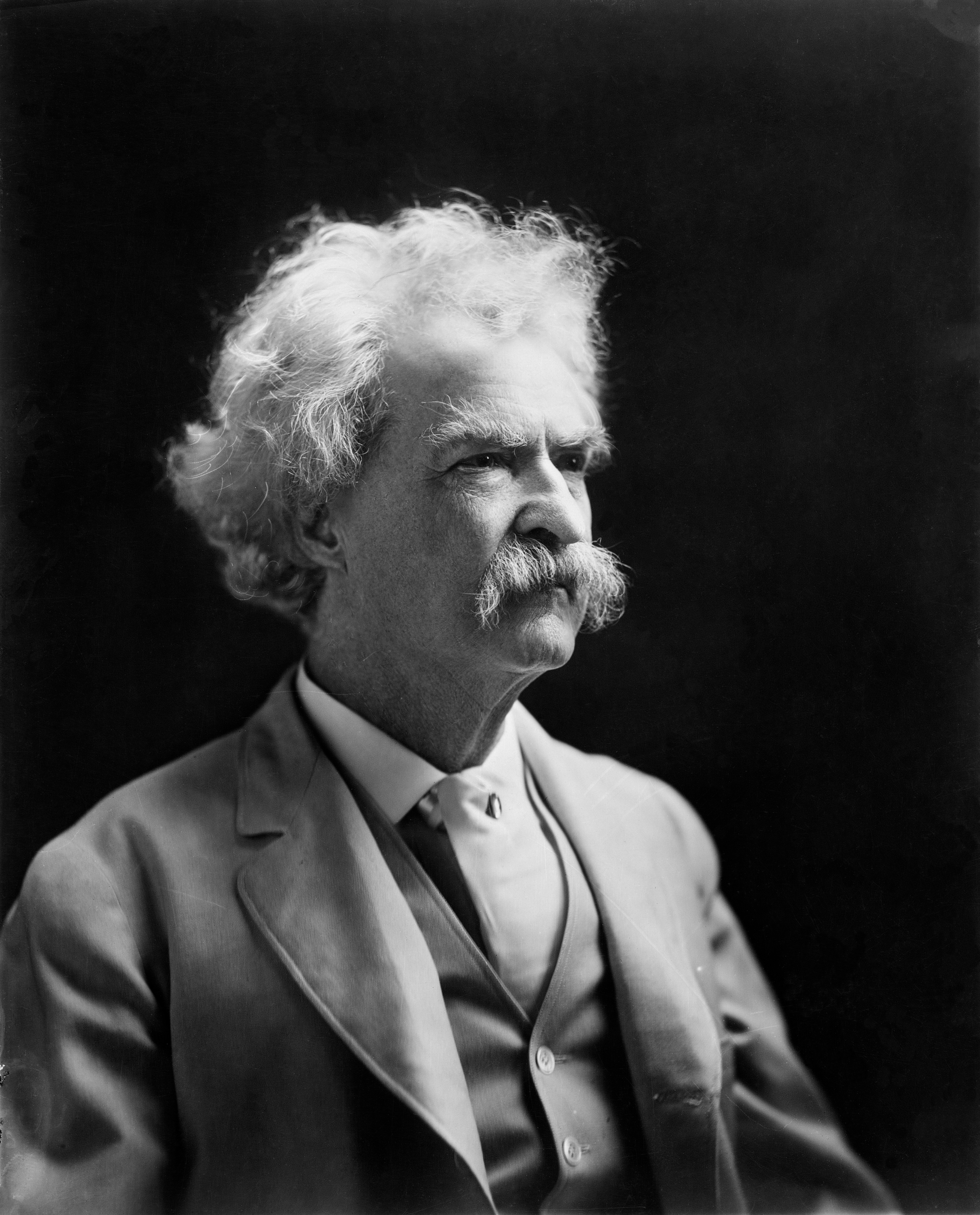 Thanks to Dr. Orin Hollander for reminding me of Mark Twain's powerful statement, dictated during the war in the Philippines 100 years ago, which his publisher refused to print. An excerpt:
"...When you have prayed for victory you have prayed for many unmentioned results which follow victory-- must follow it, cannot help but follow it. Upon the listening spirit of God fell also the unspoken part of the prayer. He commandeth me to put it into words. Listen!
"'O Lord our Father, our young patriots, idols of our hearts, go forth to battle -- be Thou near them! With them -- in spirit -- we also go forth from the sweet peace of our beloved firesides to smite the foe. O Lord our God, help us to tear their soldiers to bloody shreds with our shells; help us to cover their smiling fields with the pale forms of their patriot dead; help us to drown the thunder of the guns with the shrieks of their wounded, writhing in pain; help us to lay waste their humble homes with a hurricane of fire; help us to wring the hearts of their unoffending widows with unavailing grief; help us to turn them out roofless with little children to wander unfriended the wastes of their desolated land in rags and hunger and thirst, sports of the sun flames of summer and the icy winds of winter, broken in spirit, worn with travail, imploring Thee for the refuge of the grave and denied it -- for our sakes who adore Thee, Lord, blast their hopes, blight their lives, protract their bitter pilgrimage, make heavy their steps, water their way with their tears, stain the white snow with the blood of their wounded feet! We ask it, in the spirit of love, of Him Who is the Source of Love, and Who is the ever-faithful refuge and friend of all that are sore beset and seek His aid with humble and contrite hearts. Amen.
"(After a pause.) 'Ye have prayed it; if ye still desire it, speak! The messenger of the Most High waits!'
"It was believed afterward that the man was a lunatic, because there was no sense in what he said."
Wednesday, October 25, 2006
War Poetry II

One of the better satires, from one Norman Ball, who certainly seems to have a good ear:
The Oz Man II
(In the Shameful Shadow of Shelley's 'Ozymandias')
I met a Baathist from a ravaged land
Who said: Two short, blue-trousered legs of stone
Stand in the desert. Near them, on the sand,
Half-dazed by shock and awe, a visage frowns,
with wrinkled lip, and smirk of chimp-command.
No doubt Dick Cheney well those passions read,
Which squawk on yet, as do most lame-duck things,
Like mice that roared, while at the trough they fed,
And on one trouser-cuff these words appear:
"My name is W, unelected King:
Look on my Evil Axis and despair!"
No liberty remains. Round the decay
Of neo-cons and hegemonic air,
Fallujah's level sands stretch far away.
War Poetry

Many readers have their own thoughts about Kipling and about war poetry appropriate to Iraq. Some have sent in their own compositions. But this is a classic:
Here's something from LT. S. L. Sassoon known in WW I as the " Trench Poet"
Base Details
If I were fierce, and bald, and short of breath,
I'd live with Scarlet Majors at the base,
And speed glum heros up the line to death,
You'd see me with my puffy petulent face,
guzzling and gulping in the best hotel,
Reading the roll of honor, " poor young chap,"
I'd say - " I used to know his father well,
Yes, we've lost heavily in this last scrap."
And when the war is done and youth stone dead,
I'd toddle safely home and die - in bed.
Things never seem to change, do they? As Woody Guthrie sang... " the worst of men must fight and the best of men must die..."
Thanks for listening.
Ray Brown
U.S. Army Infantry
Viet Nam 68-69
Timelines: Iraq and WWII
In response to the latest Shadowland column, about Kevin Tillman's scream of rage at the administration and its war, a reader in California who still clings to "stay the course" rhetoric asks, "Would today's America have the fortitute[sic] to persevere in World War II?"
Of course the answer is yes. But consider this:
From the attack on Pearl Harbor in December 1941 to final victory over Japan in August 1945, three years and eight months passed. The war was over.
From the invasion of Iraq in March 2003 to November 2006, three years and eight months will have passed. And there is no end to this war in sight. - C.D.
Monday, October 23, 2006
Follow-Up: Alberto's Retraction
So, Alberto Fernandez retracted his remarks about the arrogance and stupidity of American policy in Iraq -- sort of. This very brief response appeared overnight on the State Department's Web site from the Office of the Spokesman:
In response to questions about his recent interview with Al-Jazeera, the following is a comment attributable to Mr. Alberto Fernandez:
"Upon reading the transcript of my appearance on Al-Jazeera, I realized that I seriously misspoke by using the phrase 'there has been arrogance and stupidity' by the U.S. in Iraq. This represents neither my views nor those of the State Department. I apologize."
###
2006/947
The irony, of course, is that this is the sanest admission the administration has made about Iraq in a long while -- if ever -- and perhaps even some Republicans were ready to applaud what had seemed to be, briefly, such candor and clarity coming out of Foggy Bottom. - C.D.
Sunday, October 22, 2006
Iraq: A Rare Voice of Reason in D.C.
 I hope Alberto Fernandez isn't in too much trouble. The director of public diplomacy for the State Department's Bureau of Near Eastern Affairs, Fernandez has been for several years now the only credible voice defending what is an almost entirely discredited policy in the Arab world. I think he always knew that one day someone in D.C. would pick up on the kinds of things he said in Arabic on Al-Jazeera. You know, like, the truth. And then he'd have the Bush administration's infamous loyalty test applied to him -- and most likely fail. We'll see. His description of U.S. policy in Iraq as "arrogant and stupid" is leading the AP wires.
In the meantime, you might want to take a look at Zvika Krieger's excellent little profile of Fernandez from a few weeks ago. - C.D.
Subscribe to:
Posts (Atom)