|
Showing posts with label El Salvador. Show all posts
Showing posts with label El Salvador. Show all posts
Monday, April 20, 2020
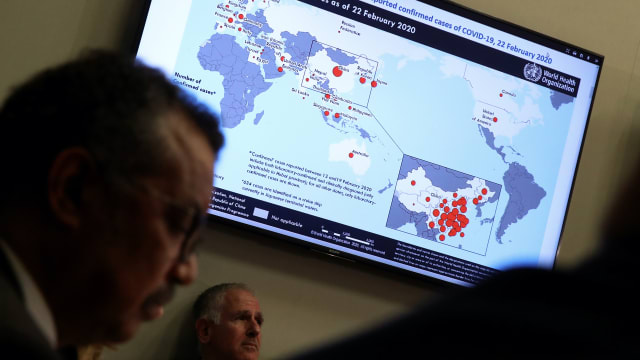
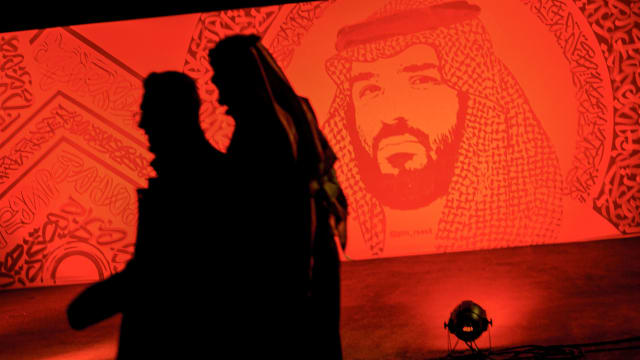
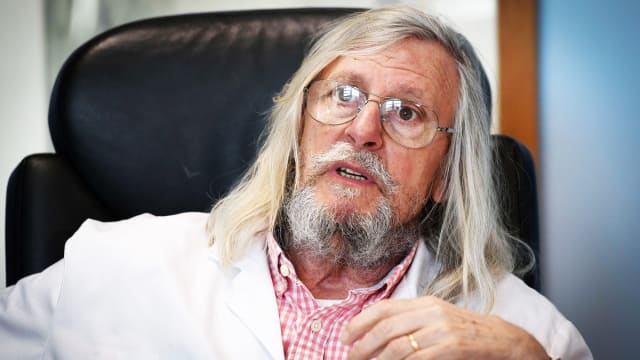
Essays about Joan Didion on California, John Gregory Dunne on Patriotism, China and the WHO, MBS and COVID-19, and Trump's HCQ Guru
 Still locked down. Doing a lot of reading from my bookshelves and my computer archives. And it struck me that before reading about Joan Didion in my latest piece for the Beast, maybe one should read something about her husband, John Gregory Dunne, whom she adored, and who inspired some of her greatest work.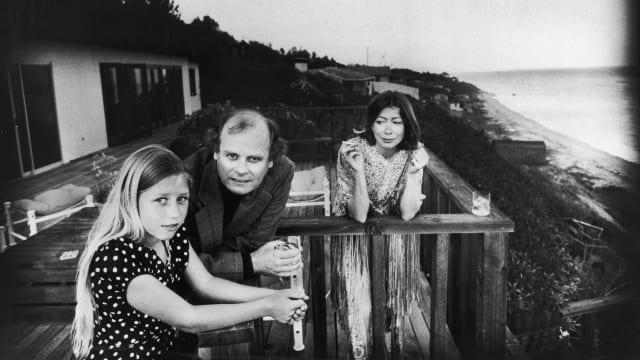


Monday, October 23, 2017
Monday, November 28, 2016
My latest: The Nun Murders and the Reagan Transition Team - Lessons for Now; and France's Next President


Christopher Dickey
World News Editor - The Daily Beast
Contributor - NBC/MSNBC News
Twitter and Instagram @csdickey
Sunday, November 27, 2016
18 Years Ago: Investigating the Murder of the American Nuns in El Salvador — 18 Years Before That
For the moment, this story is not readily available on the Newsweek site, so I am reprinting it here. When it is available, I will post a link.


December 7, 1998, Atlantic Edition
Not Today, Not Tomorrow
BY CHRISTOPHER DICKEY
In 1980, four Americans were murdered in El Salvador. On his return there, a reporter finds that the case is not yet closed.
EIGHTEEN YEARS AGO THIS WEEK, three American nuns and a religious volunteer were abducted, raped and murdered in El Salvador. Five common soldiers were eventually convicted of the crime, but the families of Ita Ford, Maura Clarke, Dorothy Kazel and Jean Donovan always suspected that the killing was ordered by higher-ranking officers. For 18 years they've tried to pursue the investigation.
Now, at last, they may be close to a break in the case. Under direct orders from President Clinton, the administration has begun releasing thousands of long-secret documents. The Salvadoran press is full of accusations drawn from those papers. Some of the convicted killers are talking. Retired Salvadoran officers are fingering erstwhile colleagues.
The key question, always unanswered, was whether senior commanders in the Salvadoran military ordered the execution of the nuns. A definitive picture of the murder has not yet emerged. But the image is getting clearer. Also apparent is a pattern of willful ignorance by American officials who were bent on protecting their fragile, promilitary policy in El Salvador throughout a brutal decade. Scott Greathead of the Lawyers Committee for Human Rights in New York puts the case bluntly. Successive U.S. administrations "pursued every lead except the leads that went up the chain of command," he says. No commissioned officer with authority over the convicted soldiers was ever interrogated by Salvadoran prosecutors or American investigators.
Last March, Greathead and his colleague Robert Weiner interviewed four of the five convicted killers, then in prison. Only the squad leader, Sub-Sgt. Luis Antonio Colindres Aleman, refused to talk. The four who did talk said Colindres had told them he was acting on higher authority when he ordered them to kill the nuns.
Then the lawyers, who have been working with the church-women's families for 16 years, found two key Salvadoran generals living in Florida. One is Carlos Eugenio Vides Casanova. In 1980 he was commander of the Guardia Nacional, El Salvador's rural gendarmerie. All five of the convicted soldiers served under him. So did the officers who directed the initial cover-up of the crime -- a cover-up documented in U.S. Embassy cables. Vides Casanova told the lawyers that he had no responsibility whatsoever for the crime or attempts to conceal it.
The other general found in Florida, Jose Guillermo Garcia, was El Salvador's Defense minister when the nuns were killed. Garcia, too, denied any responsibility. But he told the lawyers something that he had once said to the U.S. ambassador to El Salvador. In the words of a 1985 embassy cable to Washington: "When it became clear that the women had been murdered [Garcia] thought immediately of Colonel Edgardo Casanova."
In 1980, Col. Oscar Edgardo Casanova Vejar, to use his full name, was the regional commander of the Zacatecoluca garrison, within whose jurisdiction was the international airport. Casanova Vejar is the son of a former head of the Guardia Nacional, and a first cousin of Vides Casanova, Guardia commander in 1980 and the man who now maintains his ignorance of almost everything to do with the murders. Late last month, I went to hear Casanova Vejar's denials for myself. It was my first time in El Salvador in almost 15 years. In the early 1980s I was reporting on Central America for The Washington Post; for many Americans, and for me, the murder of the nuns has lingered as an unforgettable example of suffering in a small country that found itself a major battleground in the final days of the cold war.
El Salvador's international airport has not changed much. It's near the coast, and it's a long, lonely drive to the capital. I felt a tremor of remembered fear as the flight from Miami touched down. In 1980, each time I landed I was terrified. You saw death everywhere, all the time. Bodies were thrown into gutters and left to rot. But the killing was not random -- or not quite. Left-wing "popular organizations" with ties to guerrilla groups were trying to launch an uprising. Army officers created death squads with names like La Mano Blanca (The White Hand) to wipe out suspected revolutionaries. Hundreds, then thousands, of innocents died in the hideous process of abduction, torture and murder. And the death squads were winning. In March of 1980 even the Arch-bishop of San Salvador was gunned down. By the closing months of the year no one was immune from the slaughter. Not even Americans.
On the evening of Dec. 2, 1980, Dorothy Kazel and Jean Donovan went to the airport to meet Ita Ford and Maura Clarke, who were returning from a conference in Nicaragua. A Guardia soldier inside the terminal telephoned Colindres to alert him to the presence of two "suspicious women." As night fell, Colindres set up a double roadblock on the airport road. Eight of his men were assigned to hold up traffic and allow only the nuns' minibus to pass. Colindres and his squad, wearing civilian clothes, then intercepted the nuns. About an hour later, after some car problems, Colindres made at least one phone call, and possibly others, from a little Guardia outpost in the village of Rosario de la Paz. That much is well established in U.S. government documents. According to the statements taken from Colindres's subordinates by Weiner and Greathead, it was after his chat on the telephone that Colindres announced he had orders to kill the women. The bodies were left in the open to be buried, later, by what-ever peasants found them.
The nuns were the first Americans to be killed, but not the last. A month after the churchwomen's bodies were dragged out of their dusty grave near the airport, two Americans sent by the AFL-CIO to help with a land-reform program were shot down in San Salvador's Sheraton Hotel. Two right-wing civilians were arrested. De-classified U.S. documents show confidential military sources implicated members of the Guardia's intelligence section (S-2). But no one was ever brought to trial. Many officers now believed they could wage their dirty war with impunity.
The Salvadoran military grew from 11,000 men in 1979 to 57,000 in 1989, eventually underwritten by billions of dollars in U.S. aid. The toll of the war mounted: 70,000 people died. The Army was always said by Washington to be growing more professional, more conscious of human rights. Then, in November 1989 -- nine full years after the nuns were murdered -- a group of elite, American-trained Salvadoran soldiers slaughtered six Jesuit priests deemed "subversive." As a U.S. Embassy cable reported in January 1990, "if the system had brought to justice those responsible for the famous 'Sheraton murders' and for the killing of the nuns a few years ago, the signal that such crimes would not be tolerated would have been clear."
But "the system" had done all it was able or willing to do with the conviction of Colindres and his squad. In 1980 and 1981, even as Guardia commander Vides Casanova said he was conducting an investigation, his senior officers were directing a cover-up. Only when a young U.S. diplomat named Carl Gettinger developed an independent source in the Guardia -- a lieu-tenant involved with so many death-squad activities that embassy cables referred to him as "Killer" -- was the case broken. Killer wore a wire and got Colindres confessing on tape. The sergeant was arrested and finally, in 1984, he and his men were convicted.
At that point, U.S. and Salvadoran officials might have started a more intense effort to discover any involvement by higher-ranking officers: for example, who did Colindres phone on the night of the murder? But even after Defense Minister Garcia and another top officer told the embassy in 1985 they suspected that Casanova Vejar was involved in the crime, there was no follow-up. Instead, Killer's tape -- known as "the special embassy evidence" -- was cited, unseen and unheard by the public, as proof that no higher orders were given. Yet the transcript, finally released this year, does not settle that question. When Colindres was polygraphed by the FBI, he was never asked if he was ordered to "detain," "arrest" or "execute" the four women; he was asked only if he was told to "commit an outrage against them." That he answered in the negative "without any sign of deception," according to the documents. The suspicion that Colindres was not interrogated thoroughly has left the families of the murdered women bitter. He was released from jail last summer and is now in hiding.
In El Salvador last month, Casanova Vejar was quick to return the American lawyers' calls. His position as the leading suspect among higher officers had already been headlined in the Salvadoran press. I asked if I could sit in on the meeting between him and the lawyers, and he agreed. A dignified man with blow-dried gray hair, he now runs a small trucking company west of the capital. Since his retirement from the Army, he has traded his uniform for a polo shirt, his web belt for a leather one from Tommy Hilfiger.
Casanova Vejar said he had nothing to do with the killing of the nuns. The first news he got of the incident, he said, was when Gettinger, the embassy officer, called him after the women went missing. In any case, said Casanova Vejar, Colindres and his men did not report to him. There was, he said, a "Special Defense Command" in charge of the international airport. (In Florida a few days later, I repeated that line to General Garcia, the former Defense minister. Special Defense Command? "That's the first I ever heard of it," he said, shaking his head.)
Greathead and Weiner were not convinced. To believe Casanova Vejar's contention that he knew nothing, one must assume that in a small command in rural El Salvador, a lowly sergeant like Colindres could take it into his head to deploy 14 men, disrupt traffic out of the airport, target, kidnap, rape and murder four American women religious workers, then leave behind their unburied bodies and their burned-out vehicle with no one the wiser at headquarters. Casanova Vejar shrugged. "Something can be happening five kilometers away," he said, "and we wouldn't know it."
The role of Casanova Vejar was not the only lead pursued by the Lawyers Committee last month. The Americans also talked to former military commanders who told them Guardia officers in the province where Ita Ford and Maura Clarke had their mission had spread word the women were "subversives." Such information was sent to the intelligence division of the Guardia, the S-2, in the capital, then distributed to outposts all over the country. In El Salvador in those days, such a report was tantamount to a death warrant.
A key officer in Guardia intelligence at the time was Lt. Isidro Lopez Sibrian, who was implicated by a U.S. investigation into the Sheraton killings, but was released by Salvadoran courts. He subsequently spent a term in jail for his role in a kidnap-for-profit racket. Under a new penal code, which went into effect this year, Lopez Sibrian was released from prison for good behavior. He left the country -- a violation of his parole -- and is now believed to be living in Mexico. The Lawyers Committee has asked the State Department to help track him down and send him back to jail for questioning about the nuns case.
Today there are no roadblocks at the El Salvador airport. The Guardia Nacional has been disbanded. In the capital, the Sheraton Hotel has changed its name. Since the fighting ended in 1992. Salvadoran politics have been transformed. The democratic process is taking hold. But the culture of violence, and vengeance, remains, and is likely to as long as so many murders -- tens of thousands of them committed in the war -- go unsolved in the peace.
In his little air-conditioned office far outside San Salvador, the blow-dried Colonel Casanova Vejar tries to fend off the lawyers' questions by talking about his daughter. In 1989, on her 21st birthday, he says, she was gunned down in front of his house. Her body was almost torn to pieces by the 30 bullets blasted into her. "Nobody investigated that," he said. "Nobody looked into that." To his listeners, he seemed to be playing for sympathy, without making any direct link with the accusations leveled against him in the nuns case. "It was just because I was a colonel," he said. As the lawyers and I interviewed more government officials and retired Army officers, it was clear that many did indeed feel sympathy for Casanova Vejar's loss. "There is a sense that he got his," says one retired colonel. "So maybe he should be left alone."
In a country that wants to forget the past and move on, it is easy to see how such sentiments can take hold. For the nuns' families, however, those feelings are bound to be mingled with others. The families, says Ita Ford's brother William, are simply looking for justice. "People who do these things should know that maybe not today, maybe not tomorrow, but some day somebody is going to catch up with them." Almost two decades after the nuns' murders, the search for justice continues.

BY CHRISTOPHER DICKEY
In 1980, four Americans were murdered in El Salvador. On his return there, a reporter finds that the case is not yet closed.
EIGHTEEN YEARS AGO THIS WEEK, three American nuns and a religious volunteer were abducted, raped and murdered in El Salvador. Five common soldiers were eventually convicted of the crime, but the families of Ita Ford, Maura Clarke, Dorothy Kazel and Jean Donovan always suspected that the killing was ordered by higher-ranking officers. For 18 years they've tried to pursue the investigation.
Now, at last, they may be close to a break in the case. Under direct orders from President Clinton, the administration has begun releasing thousands of long-secret documents. The Salvadoran press is full of accusations drawn from those papers. Some of the convicted killers are talking. Retired Salvadoran officers are fingering erstwhile colleagues.
The key question, always unanswered, was whether senior commanders in the Salvadoran military ordered the execution of the nuns. A definitive picture of the murder has not yet emerged. But the image is getting clearer. Also apparent is a pattern of willful ignorance by American officials who were bent on protecting their fragile, promilitary policy in El Salvador throughout a brutal decade. Scott Greathead of the Lawyers Committee for Human Rights in New York puts the case bluntly. Successive U.S. administrations "pursued every lead except the leads that went up the chain of command," he says. No commissioned officer with authority over the convicted soldiers was ever interrogated by Salvadoran prosecutors or American investigators.
Last March, Greathead and his colleague Robert Weiner interviewed four of the five convicted killers, then in prison. Only the squad leader, Sub-Sgt. Luis Antonio Colindres Aleman, refused to talk. The four who did talk said Colindres had told them he was acting on higher authority when he ordered them to kill the nuns.
Then the lawyers, who have been working with the church-women's families for 16 years, found two key Salvadoran generals living in Florida. One is Carlos Eugenio Vides Casanova. In 1980 he was commander of the Guardia Nacional, El Salvador's rural gendarmerie. All five of the convicted soldiers served under him. So did the officers who directed the initial cover-up of the crime -- a cover-up documented in U.S. Embassy cables. Vides Casanova told the lawyers that he had no responsibility whatsoever for the crime or attempts to conceal it.
The other general found in Florida, Jose Guillermo Garcia, was El Salvador's Defense minister when the nuns were killed. Garcia, too, denied any responsibility. But he told the lawyers something that he had once said to the U.S. ambassador to El Salvador. In the words of a 1985 embassy cable to Washington: "When it became clear that the women had been murdered [Garcia] thought immediately of Colonel Edgardo Casanova."
In 1980, Col. Oscar Edgardo Casanova Vejar, to use his full name, was the regional commander of the Zacatecoluca garrison, within whose jurisdiction was the international airport. Casanova Vejar is the son of a former head of the Guardia Nacional, and a first cousin of Vides Casanova, Guardia commander in 1980 and the man who now maintains his ignorance of almost everything to do with the murders. Late last month, I went to hear Casanova Vejar's denials for myself. It was my first time in El Salvador in almost 15 years. In the early 1980s I was reporting on Central America for The Washington Post; for many Americans, and for me, the murder of the nuns has lingered as an unforgettable example of suffering in a small country that found itself a major battleground in the final days of the cold war.
El Salvador's international airport has not changed much. It's near the coast, and it's a long, lonely drive to the capital. I felt a tremor of remembered fear as the flight from Miami touched down. In 1980, each time I landed I was terrified. You saw death everywhere, all the time. Bodies were thrown into gutters and left to rot. But the killing was not random -- or not quite. Left-wing "popular organizations" with ties to guerrilla groups were trying to launch an uprising. Army officers created death squads with names like La Mano Blanca (The White Hand) to wipe out suspected revolutionaries. Hundreds, then thousands, of innocents died in the hideous process of abduction, torture and murder. And the death squads were winning. In March of 1980 even the Arch-bishop of San Salvador was gunned down. By the closing months of the year no one was immune from the slaughter. Not even Americans.
On the evening of Dec. 2, 1980, Dorothy Kazel and Jean Donovan went to the airport to meet Ita Ford and Maura Clarke, who were returning from a conference in Nicaragua. A Guardia soldier inside the terminal telephoned Colindres to alert him to the presence of two "suspicious women." As night fell, Colindres set up a double roadblock on the airport road. Eight of his men were assigned to hold up traffic and allow only the nuns' minibus to pass. Colindres and his squad, wearing civilian clothes, then intercepted the nuns. About an hour later, after some car problems, Colindres made at least one phone call, and possibly others, from a little Guardia outpost in the village of Rosario de la Paz. That much is well established in U.S. government documents. According to the statements taken from Colindres's subordinates by Weiner and Greathead, it was after his chat on the telephone that Colindres announced he had orders to kill the women. The bodies were left in the open to be buried, later, by what-ever peasants found them.
The nuns were the first Americans to be killed, but not the last. A month after the churchwomen's bodies were dragged out of their dusty grave near the airport, two Americans sent by the AFL-CIO to help with a land-reform program were shot down in San Salvador's Sheraton Hotel. Two right-wing civilians were arrested. De-classified U.S. documents show confidential military sources implicated members of the Guardia's intelligence section (S-2). But no one was ever brought to trial. Many officers now believed they could wage their dirty war with impunity.
The Salvadoran military grew from 11,000 men in 1979 to 57,000 in 1989, eventually underwritten by billions of dollars in U.S. aid. The toll of the war mounted: 70,000 people died. The Army was always said by Washington to be growing more professional, more conscious of human rights. Then, in November 1989 -- nine full years after the nuns were murdered -- a group of elite, American-trained Salvadoran soldiers slaughtered six Jesuit priests deemed "subversive." As a U.S. Embassy cable reported in January 1990, "if the system had brought to justice those responsible for the famous 'Sheraton murders' and for the killing of the nuns a few years ago, the signal that such crimes would not be tolerated would have been clear."
But "the system" had done all it was able or willing to do with the conviction of Colindres and his squad. In 1980 and 1981, even as Guardia commander Vides Casanova said he was conducting an investigation, his senior officers were directing a cover-up. Only when a young U.S. diplomat named Carl Gettinger developed an independent source in the Guardia -- a lieu-tenant involved with so many death-squad activities that embassy cables referred to him as "Killer" -- was the case broken. Killer wore a wire and got Colindres confessing on tape. The sergeant was arrested and finally, in 1984, he and his men were convicted.
At that point, U.S. and Salvadoran officials might have started a more intense effort to discover any involvement by higher-ranking officers: for example, who did Colindres phone on the night of the murder? But even after Defense Minister Garcia and another top officer told the embassy in 1985 they suspected that Casanova Vejar was involved in the crime, there was no follow-up. Instead, Killer's tape -- known as "the special embassy evidence" -- was cited, unseen and unheard by the public, as proof that no higher orders were given. Yet the transcript, finally released this year, does not settle that question. When Colindres was polygraphed by the FBI, he was never asked if he was ordered to "detain," "arrest" or "execute" the four women; he was asked only if he was told to "commit an outrage against them." That he answered in the negative "without any sign of deception," according to the documents. The suspicion that Colindres was not interrogated thoroughly has left the families of the murdered women bitter. He was released from jail last summer and is now in hiding.
In El Salvador last month, Casanova Vejar was quick to return the American lawyers' calls. His position as the leading suspect among higher officers had already been headlined in the Salvadoran press. I asked if I could sit in on the meeting between him and the lawyers, and he agreed. A dignified man with blow-dried gray hair, he now runs a small trucking company west of the capital. Since his retirement from the Army, he has traded his uniform for a polo shirt, his web belt for a leather one from Tommy Hilfiger.
Casanova Vejar said he had nothing to do with the killing of the nuns. The first news he got of the incident, he said, was when Gettinger, the embassy officer, called him after the women went missing. In any case, said Casanova Vejar, Colindres and his men did not report to him. There was, he said, a "Special Defense Command" in charge of the international airport. (In Florida a few days later, I repeated that line to General Garcia, the former Defense minister. Special Defense Command? "That's the first I ever heard of it," he said, shaking his head.)
Greathead and Weiner were not convinced. To believe Casanova Vejar's contention that he knew nothing, one must assume that in a small command in rural El Salvador, a lowly sergeant like Colindres could take it into his head to deploy 14 men, disrupt traffic out of the airport, target, kidnap, rape and murder four American women religious workers, then leave behind their unburied bodies and their burned-out vehicle with no one the wiser at headquarters. Casanova Vejar shrugged. "Something can be happening five kilometers away," he said, "and we wouldn't know it."
The role of Casanova Vejar was not the only lead pursued by the Lawyers Committee last month. The Americans also talked to former military commanders who told them Guardia officers in the province where Ita Ford and Maura Clarke had their mission had spread word the women were "subversives." Such information was sent to the intelligence division of the Guardia, the S-2, in the capital, then distributed to outposts all over the country. In El Salvador in those days, such a report was tantamount to a death warrant.
A key officer in Guardia intelligence at the time was Lt. Isidro Lopez Sibrian, who was implicated by a U.S. investigation into the Sheraton killings, but was released by Salvadoran courts. He subsequently spent a term in jail for his role in a kidnap-for-profit racket. Under a new penal code, which went into effect this year, Lopez Sibrian was released from prison for good behavior. He left the country -- a violation of his parole -- and is now believed to be living in Mexico. The Lawyers Committee has asked the State Department to help track him down and send him back to jail for questioning about the nuns case.
Today there are no roadblocks at the El Salvador airport. The Guardia Nacional has been disbanded. In the capital, the Sheraton Hotel has changed its name. Since the fighting ended in 1992. Salvadoran politics have been transformed. The democratic process is taking hold. But the culture of violence, and vengeance, remains, and is likely to as long as so many murders -- tens of thousands of them committed in the war -- go unsolved in the peace.
In his little air-conditioned office far outside San Salvador, the blow-dried Colonel Casanova Vejar tries to fend off the lawyers' questions by talking about his daughter. In 1989, on her 21st birthday, he says, she was gunned down in front of his house. Her body was almost torn to pieces by the 30 bullets blasted into her. "Nobody investigated that," he said. "Nobody looked into that." To his listeners, he seemed to be playing for sympathy, without making any direct link with the accusations leveled against him in the nuns case. "It was just because I was a colonel," he said. As the lawyers and I interviewed more government officials and retired Army officers, it was clear that many did indeed feel sympathy for Casanova Vejar's loss. "There is a sense that he got his," says one retired colonel. "So maybe he should be left alone."
In a country that wants to forget the past and move on, it is easy to see how such sentiments can take hold. For the nuns' families, however, those feelings are bound to be mingled with others. The families, says Ita Ford's brother William, are simply looking for justice. "People who do these things should know that maybe not today, maybe not tomorrow, but some day somebody is going to catch up with them." Almost two decades after the nuns' murders, the search for justice continues.
Subscribe to:
Posts (Atom)