Audio: Are Kurds in Control of Iraq?
Newsweek On Air
Oct. 9, 2005 - Guests: Christopher Dickey, NEWSWEEK Paris Bureau Chief/Mid-East Regional Editor; Fareed Zakaria, Editor of NEWSWEEK International Editions and Host of Foreign Exchange (PBS); and George Packer, New Yorker Staff Writer, author of “The Assassins’ Gate: America in Iraq.”
Also available as a podcast from Newsweek.
Sunday, October 09, 2005


Saturday, October 08, 2005
Terror: Crying Wolf, Playing Politics
The War in Context tracks breaking news and adds thoughtful perspective. Along with the David Goldenberg post, it raises some critical questions that ought to concern all of us:
Al Qaeda tells ally in Iraq to strive for global goals
By Douglas Jehl and Thom Shanker, New York Times, October 7, 2005
The second-ranking leader of Al Qaeda has warned the top militant in Iraq that attacks on civilians and videotaped executions committed by his followers threaten to jeopardize the broader extremist cause, a senior United States official said Thursday.The warning, from Ayman al-Zawahiri to Abu Musab al-Zarqawi, was spelled out in a 6,000-word letter, dated early in July, that was obtained by American forces conducting counterterrorism operations in Iraq, the official said in a briefing.Mr. Zawahiri said that Iraq had become "the place for the greatest battle of Islam in this era," but that Mr. Zarqawi's forces should keep in mind that it was only a stepping stone toward a broader victory for militant Islam across the Middle East."The mujahedeen must not have their mission end with the expulsion of the Americans from Iraq, and then lay down their weapons, and silence the fighting zeal," Mr. Zawahiri said in the letter, according to a partial translation provided by the official, who declined to provide verbatim translations of anything more than three sentences from the document. Under the ground rules for the briefing, the official cannot be identified. [complete article]
Comment -- Do al Qaeda and the Bush administration now have a coordinated communications strategy? I'd have to say that it was a stunning stroke of luck that the Zawahiri treatise came to light the same day that President Bush gave his "major" address on the war on terror. But no! The NYT's stalwart reporters inform us that "the official said the decision to disclose the letter was made independently of the speech." Who could doubt his word?Supposedly we're only being told about the letter's existence because the story had already been leaked to CBS and NBC - this, during the same week that we learned that a suspected spy was working in Dick Cheney's office. Of course in this case the fact that the story was "leaked" is not meant to imply that al Qaeda might have a mole in the White House. It does however beg the question as to how any responsible reporters would blithely repeat the assertion that the release of this news had nothing to do with Bush's speech.
Al Qaeda tells ally in Iraq to strive for global goals
By Douglas Jehl and Thom Shanker, New York Times, October 7, 2005
The second-ranking leader of Al Qaeda has warned the top militant in Iraq that attacks on civilians and videotaped executions committed by his followers threaten to jeopardize the broader extremist cause, a senior United States official said Thursday.The warning, from Ayman al-Zawahiri to Abu Musab al-Zarqawi, was spelled out in a 6,000-word letter, dated early in July, that was obtained by American forces conducting counterterrorism operations in Iraq, the official said in a briefing.Mr. Zawahiri said that Iraq had become "the place for the greatest battle of Islam in this era," but that Mr. Zarqawi's forces should keep in mind that it was only a stepping stone toward a broader victory for militant Islam across the Middle East."The mujahedeen must not have their mission end with the expulsion of the Americans from Iraq, and then lay down their weapons, and silence the fighting zeal," Mr. Zawahiri said in the letter, according to a partial translation provided by the official, who declined to provide verbatim translations of anything more than three sentences from the document. Under the ground rules for the briefing, the official cannot be identified. [complete article]
Comment -- Do al Qaeda and the Bush administration now have a coordinated communications strategy? I'd have to say that it was a stunning stroke of luck that the Zawahiri treatise came to light the same day that President Bush gave his "major" address on the war on terror. But no! The NYT's stalwart reporters inform us that "the official said the decision to disclose the letter was made independently of the speech." Who could doubt his word?Supposedly we're only being told about the letter's existence because the story had already been leaked to CBS and NBC - this, during the same week that we learned that a suspected spy was working in Dick Cheney's office. Of course in this case the fact that the story was "leaked" is not meant to imply that al Qaeda might have a mole in the White House. It does however beg the question as to how any responsible reporters would blithely repeat the assertion that the release of this news had nothing to do with Bush's speech.
My buddy of many years David Goldenberg, who's found his real vocation in blogging, nailed something that had been bothering me but I hadn't had time to write about:
October 6, 2005
Two Minds with but a Single Thought
A nation of sheep will beget a government of wolves.—Edward R Murrow
Bush’s ratings in the polls stink. He gives a speech saying Iraq is the answer to fighting worldwide terrorism to try to bolster some kind of support. Mayor Bloomberg of New York is having political difficulties as he faces re-election. He “had been invited to appear at a mayoral debate Thursday evening, but declined -- a decision that has brought him considerable criticism.”What’s the quickest way to create a diversion and make leadership look solid and in control?
New York City's subway system was put under heightened alert Thursday after officials received information from the FBI about a "specific threat," Mayor Michael Bloomberg said.—CNN
And to help with the Iraq connection:
A law enforcement official who spoke on condition of anonymity said the threat was “specific to place, time and method,” which was a bombing. The official said the information resulted from the arrest of al-Qaida operatives in Iraq.—MSNBC
But there is a soft underbelly to this fearmongering:
The Department of Homeland Security said the intelligence community believes the information is of "doubtful" credibility.—Newsday
It’s not as if this scare is a total loss—there is still the undercurrent in the media about bird flu pandemic, which could kill millions. Don’t think Bush hasn’t got some ideas about how to fight bird flu:
A call by President George W. Bush for Congress to give him the power to use the military in law enforcement roles in the event of a bird flu pandemic has been criticized as akin to introducing martial law.Bush said aggressive action would be needed to prevent a potentiallydisastrous U.S. outbreak of the disease that is sweeping through Asian poultry and which experts fear could mutate to pass between humans.—CNN, Bush military bird flu role slammed
What this country needs is a calming assurance from our leaders that will let us all sleep better and build our immune systems so we won’t be so susceptible to all these viruses—and work for common goals, instead of constantly playing “duck and cover.”
That takes courageous leadership, because the consequence of a fearful populace is an easily led one, like sheep, which helps if you’re a fearful leader.
This kind of thing greatly increases the danger that just when the sheep really do need to listen, they'll think their government is crying wolf. - CD
See:
Essential Emmes
October 6, 2005
Two Minds with but a Single Thought
A nation of sheep will beget a government of wolves.—Edward R Murrow
Bush’s ratings in the polls stink. He gives a speech saying Iraq is the answer to fighting worldwide terrorism to try to bolster some kind of support. Mayor Bloomberg of New York is having political difficulties as he faces re-election. He “had been invited to appear at a mayoral debate Thursday evening, but declined -- a decision that has brought him considerable criticism.”What’s the quickest way to create a diversion and make leadership look solid and in control?
New York City's subway system was put under heightened alert Thursday after officials received information from the FBI about a "specific threat," Mayor Michael Bloomberg said.—CNN
And to help with the Iraq connection:
A law enforcement official who spoke on condition of anonymity said the threat was “specific to place, time and method,” which was a bombing. The official said the information resulted from the arrest of al-Qaida operatives in Iraq.—MSNBC
But there is a soft underbelly to this fearmongering:
The Department of Homeland Security said the intelligence community believes the information is of "doubtful" credibility.—Newsday
It’s not as if this scare is a total loss—there is still the undercurrent in the media about bird flu pandemic, which could kill millions. Don’t think Bush hasn’t got some ideas about how to fight bird flu:
A call by President George W. Bush for Congress to give him the power to use the military in law enforcement roles in the event of a bird flu pandemic has been criticized as akin to introducing martial law.Bush said aggressive action would be needed to prevent a potentiallydisastrous U.S. outbreak of the disease that is sweeping through Asian poultry and which experts fear could mutate to pass between humans.—CNN, Bush military bird flu role slammed
What this country needs is a calming assurance from our leaders that will let us all sleep better and build our immune systems so we won’t be so susceptible to all these viruses—and work for common goals, instead of constantly playing “duck and cover.”
That takes courageous leadership, because the consequence of a fearful populace is an easily led one, like sheep, which helps if you’re a fearful leader.
This kind of thing greatly increases the danger that just when the sheep really do need to listen, they'll think their government is crying wolf. - CD
See:
Essential Emmes
Friday, October 07, 2005
Nukes and the Nobel: Where Fuels Rush In
Mohamed ElBaradei, director general of the International Atomic Energy Agency, didn't give many interviews over the last few months. One of those, however, was at the beginning of July when I visited him in Vienna. We talked mainly about Iran, but he kept coming back to the more fundamental issue of "the fuel cycle," since a country that can make its own atomic fuel can also make its own fissile material for an atomic bomb. Since we met, Iran has re-started part of the conversion process that turns uranium into fuel, Tehran's talks with Europe have broken down, and after much wrangling the IAEA has opened the possibility it will refer the matter to the UN Security Council (see the September archive on this site). This morning, ElBaradei and the IAEA won the Nobel Peace Prize. Following are some previously unpublished excerpts from the raw transcript of our hour-long conversation last summer:
ElBaradei: I have been saying, not only vis a vis Iran, but also globally, that dissemination of the fuel cycle could be the Achilles heel of the non-proliferation regime. It’s an issue brought to the surface by Iran, but not only Iran. … We know now better than 30 years ago that if you have the fuel cycle you are nuclear-weapons capable, and we need to limit that number. In fact we need to reduce that number and eventually eliminate nuclear weapons capabilities rather than having 30 or 40 countries who can have nuclear weapons [whenever] they change their security perception.
Dickey: That’s what you’ve called “virtual” weapons states.
ElBaradei: "Virtual" weapons states, "closeted" weapons states. Whatever. I’ve tried in many ways to explain it. But you have the fuel cycle, then you are really like six months away from a nuclear weapon. And if I look at it from a global security perspective, well, that is too precarious. We need to reconcile the need for the use of technology and the need to protect ourselves.... I would like to have a system, not only in Iran but everywhere, that is not simply based on trust. I’d like to have a system that is inherently safe. … Can we assure countries that they will have access to the technology without having to have the whole fuel cycle?
Dickey: This is what’s called the fuel bank.
ElBaradei: Yes. ...
Dickey: What do you think Iran wants out of all this?
ElBaradei: Iran wants to get the best from its own perspective. Obviously it wants to get the maximum technology, and not just nuclear. Reactor technology is key for them. They want IT, all the modern technology, Airbus, Boeing. They need the technology to modernize. And I think they understand that the fuel cycle enables them to be part of the big boys club, and it’s a smart insurance policy, if they can get that, because again it sends a message to their neighbors. Iran wants to be a major player in the whole Middle East which is being reshaped right now. …I don’t want to speak for them, but they also would like to normalize their relationship, ultimately, with the US. Their dialogue with Europe is a bridge toward their ultimate normalization with the US. So these are the things that I guess are on their agenda. But I can’t speak for them.
So, again, when you talk about the nuclear program in Iran you are talking about regional politics, regional security – global politics, global security. So, you will have the European agenda, the American agenda, the Iranian agenda, the neighbors agenda, the Israelis, the Arabs. Everybody is affected by how this dialogue between Europe and Iran will play out. I think everybody understands that it is not just the nuclear issue, it is the whole future of the Middle East, it is the whole future of regional security, global security. That’s why it makes it more difficult, and that’s why it takes time, and that’s why people should be patient. As long as they are talking, I’m comfortable. As long as the fuel cycle is suspended, as long as they are making progress, keep at it.
Dickey: The Europeans are sounding very pessimistic these days. It’s very hard to see in the current environment how the Americans are going to offer security guarantees and a face-saving solution for this Iranian regime.
ElBaradei: The number one threat for the entire world is weapons of mass destruction. I’d rather assure our security first, and then I’ll worry about all the other issues: legitimizing regimes, democracy, human rights. If we do not have global security it might be too late to think about any of these issues. So unless I have defanged all the potential proliferators or terrorists or what have you I will not have a chance to discuss these other issues. It’s a question of priorities.
Dickey: What is the risk that talks will collapse and we’ll be looking at a breakout, Iran just walking away from the table and the treaty.
ElBaradei: I am still hoping that at the end of the day, with all the posturing, nobody can afford a confrontation. Confrontation is a lose-lose proposition. … You might see some hiccups in the process, some delays in the process, but I think we need to keep at it.
Dickey: At the end of the day, do you think Iran will become a virtual weapons state?
ElBaradei: [long sigh] What I’m trying to do is put a stop to this madness…
Also see:
Shadowland: Rita's Revelation, 23 Sep 2005
As oil prices soar, so will demands for atomic energy. Iran knows this and Americans should, too. Why it's time to rethink the global approach to nuclear proliferation.
http://www.msnbc.msn.com/id/9454837/site/newsweek/
ElBaradei: I have been saying, not only vis a vis Iran, but also globally, that dissemination of the fuel cycle could be the Achilles heel of the non-proliferation regime. It’s an issue brought to the surface by Iran, but not only Iran. … We know now better than 30 years ago that if you have the fuel cycle you are nuclear-weapons capable, and we need to limit that number. In fact we need to reduce that number and eventually eliminate nuclear weapons capabilities rather than having 30 or 40 countries who can have nuclear weapons [whenever] they change their security perception.
Dickey: That’s what you’ve called “virtual” weapons states.
ElBaradei: "Virtual" weapons states, "closeted" weapons states. Whatever. I’ve tried in many ways to explain it. But you have the fuel cycle, then you are really like six months away from a nuclear weapon. And if I look at it from a global security perspective, well, that is too precarious. We need to reconcile the need for the use of technology and the need to protect ourselves.... I would like to have a system, not only in Iran but everywhere, that is not simply based on trust. I’d like to have a system that is inherently safe. … Can we assure countries that they will have access to the technology without having to have the whole fuel cycle?
Dickey: This is what’s called the fuel bank.
ElBaradei: Yes. ...
Dickey: What do you think Iran wants out of all this?
ElBaradei: Iran wants to get the best from its own perspective. Obviously it wants to get the maximum technology, and not just nuclear. Reactor technology is key for them. They want IT, all the modern technology, Airbus, Boeing. They need the technology to modernize. And I think they understand that the fuel cycle enables them to be part of the big boys club, and it’s a smart insurance policy, if they can get that, because again it sends a message to their neighbors. Iran wants to be a major player in the whole Middle East which is being reshaped right now. …I don’t want to speak for them, but they also would like to normalize their relationship, ultimately, with the US. Their dialogue with Europe is a bridge toward their ultimate normalization with the US. So these are the things that I guess are on their agenda. But I can’t speak for them.
So, again, when you talk about the nuclear program in Iran you are talking about regional politics, regional security – global politics, global security. So, you will have the European agenda, the American agenda, the Iranian agenda, the neighbors agenda, the Israelis, the Arabs. Everybody is affected by how this dialogue between Europe and Iran will play out. I think everybody understands that it is not just the nuclear issue, it is the whole future of the Middle East, it is the whole future of regional security, global security. That’s why it makes it more difficult, and that’s why it takes time, and that’s why people should be patient. As long as they are talking, I’m comfortable. As long as the fuel cycle is suspended, as long as they are making progress, keep at it.
Dickey: The Europeans are sounding very pessimistic these days. It’s very hard to see in the current environment how the Americans are going to offer security guarantees and a face-saving solution for this Iranian regime.
ElBaradei: The number one threat for the entire world is weapons of mass destruction. I’d rather assure our security first, and then I’ll worry about all the other issues: legitimizing regimes, democracy, human rights. If we do not have global security it might be too late to think about any of these issues. So unless I have defanged all the potential proliferators or terrorists or what have you I will not have a chance to discuss these other issues. It’s a question of priorities.
Dickey: What is the risk that talks will collapse and we’ll be looking at a breakout, Iran just walking away from the table and the treaty.
ElBaradei: I am still hoping that at the end of the day, with all the posturing, nobody can afford a confrontation. Confrontation is a lose-lose proposition. … You might see some hiccups in the process, some delays in the process, but I think we need to keep at it.
Dickey: At the end of the day, do you think Iran will become a virtual weapons state?
ElBaradei: [long sigh] What I’m trying to do is put a stop to this madness…
Also see:
Shadowland: Rita's Revelation, 23 Sep 2005
As oil prices soar, so will demands for atomic energy. Iran knows this and Americans should, too. Why it's time to rethink the global approach to nuclear proliferation.
http://www.msnbc.msn.com/id/9454837/site/newsweek/
BBC: White House Denies Divine Mission
I'm sure we're all relieved by this news from London:
'The White House has dismissed as "absurd" allegations made in a BBC TV series that President Bush claimed God told him to invade Iraq.
"He's never made such comments," White House spokesman Scott McClellan said.
The comments were attributed to Mr Bush by the Palestinian negotiator Nabil Shaath in the upcoming TV series Israel and the Arabs: Elusive Peace.
Mr Shaath said that in a 2003 meeting with Mr Bush, the US president said he was "driven with a mission from God".
"President Bush said to all of us: 'I'm driven with a mission from God. God would tell me, George, go and fight those terrorists in Afghanistan. And I did, and then God would tell me, George, go and end the tyranny in Iraq... And I did.
"'And now, again, I feel God's words coming to me, Go get the Palestinians their state and get the Israelis their security, and get peace in the Middle East. And by God I'm gonna do it.'"...'
Anybody who's grown up in the South would know right away from the president's syntax and style, that wasn't God speaking, it was just the good ol' boy in George. - CD
'The White House has dismissed as "absurd" allegations made in a BBC TV series that President Bush claimed God told him to invade Iraq.
"He's never made such comments," White House spokesman Scott McClellan said.
The comments were attributed to Mr Bush by the Palestinian negotiator Nabil Shaath in the upcoming TV series Israel and the Arabs: Elusive Peace.
Mr Shaath said that in a 2003 meeting with Mr Bush, the US president said he was "driven with a mission from God".
"President Bush said to all of us: 'I'm driven with a mission from God. God would tell me, George, go and fight those terrorists in Afghanistan. And I did, and then God would tell me, George, go and end the tyranny in Iraq... And I did.
"'And now, again, I feel God's words coming to me, Go get the Palestinians their state and get the Israelis their security, and get peace in the Middle East. And by God I'm gonna do it.'"...'
Anybody who's grown up in the South would know right away from the president's syntax and style, that wasn't God speaking, it was just the good ol' boy in George. - CD
Question of the moment: If you believe in God, whose side do you believe the Almighty has taken?
James Dickey: Firebombings Then and Now
Shawn Pittard of The Great American Pinup has weighed in with the final of three superb essays looking at my father's experience in World War II and how he transformed it into fiction and poetry:
“The sound of the crowd around me was made up of high yells, all you could put up with, but around them all was the low sound, which must have been coming from the whole city. How all those high screams could have added up to that one low tone, like a glacier when it first begins to calve off, was not something I could explain.”
Almost thirty years after writing “The Firebombing,” James Dickey revisited the subject in his novel To the White Sea (Houghton Mifflin Company, 1993). This time, he put an American airman on the ground during the firebombing of Tokyo. We see the chaos, panic, and the intense-heat of a white phosphorus-and-gasoline fire through Sergeant Muldrow’s eyes.
“It was so hot that I kept looking at the arms of the coat I had on to see when they’d take fire. And then it got hotter, goddamn it, and hotter than that. I didn’t think my clothes would catch; I didn’t think that anymore then. I thought I would take fire myself, inside the clothes, and that the clothes, shoes and all, would burn up after I did.”
Also see:
Firebombings: From My Father's Wars to Mine, a lecture I gave at Clemson University, 19 Nov 2003 (PDF), and "Summer of Deliverance: A Memoir of Father and Son."
“The sound of the crowd around me was made up of high yells, all you could put up with, but around them all was the low sound, which must have been coming from the whole city. How all those high screams could have added up to that one low tone, like a glacier when it first begins to calve off, was not something I could explain.”
Almost thirty years after writing “The Firebombing,” James Dickey revisited the subject in his novel To the White Sea (Houghton Mifflin Company, 1993). This time, he put an American airman on the ground during the firebombing of Tokyo. We see the chaos, panic, and the intense-heat of a white phosphorus-and-gasoline fire through Sergeant Muldrow’s eyes.
“It was so hot that I kept looking at the arms of the coat I had on to see when they’d take fire. And then it got hotter, goddamn it, and hotter than that. I didn’t think my clothes would catch; I didn’t think that anymore then. I thought I would take fire myself, inside the clothes, and that the clothes, shoes and all, would burn up after I did.”
Also see:
Firebombings: From My Father's Wars to Mine, a lecture I gave at Clemson University, 19 Nov 2003 (PDF), and "Summer of Deliverance: A Memoir of Father and Son."
Bush: An Essential Contradiction
President George W. Bush's attempt yesterday to make his Global War on Terror the moral and military equivalent of the Cold War against the Soviet Union was less than convincing, I think, for anyone who remembers the basic threat of that bygone age: the extermination of all life on the planet. By comparison, subway bombings and even 9/11 are relatively minor concerns. As usual, the administration is playing the terrorist's game, inflating Osama Bin Laden's reputation by likening him to Stalin, describing Al Qaeda's ideology as if it were not just a security problem but an existential threat to the West. He described the terrorists' agenda as if it should be setting ours. A real mistake. Bush is playing politics, of course. He wanted to put Hurricane Katrina behind us and get back to the war president image that used to work so well for him. He wanted to justify Iraq by linking it, as ever, to Osama. But the fundamental contradiction in his approach was evident in the text of the speech:
"Some have also argued that extremism has been strengthened by the actions of our coalition in Iraq, claiming that our presence in that country has somehow caused or triggered the rage of radicals. I would remind them that we were not in Iraq on September the 11th, 2001 -- and al Qaeda attacked us anyway," said the president, which is true, as far as it goes. But a few paragraphs later, Bush boasts that with the help of other governments "we've killed or captured nearly all of those directly responsible for the September the 11th attacks." What he fails to mention is that not one of those terrorists was caught in Iraq, and the great majority were nabbed before the invasion. The threat we face now, such as it is, comes from a new generation of terrorists directly inspired by the Iraq war, and, oh yes, from Osama, the one who got away. - CD
Also see:
Newsweek Article: Jihad Express, 13 Mar 2005
For Islamic militants in Europe, Iraq far outshines Afghanistan as an urban-terrorism training ground. http://www.msnbc.msn.com/id/7169294/site/newsweek/
Shadowland: When Victory Was Ours, 25 September 2003
Nine months ago, Saddam Hussein was contained and Al Qaeda was on the run. But that just wasn’t enough for the Bush administration. No wonder readers are upset
http://msnbc.msn.com/id/3087087/
"Some have also argued that extremism has been strengthened by the actions of our coalition in Iraq, claiming that our presence in that country has somehow caused or triggered the rage of radicals. I would remind them that we were not in Iraq on September the 11th, 2001 -- and al Qaeda attacked us anyway," said the president, which is true, as far as it goes. But a few paragraphs later, Bush boasts that with the help of other governments "we've killed or captured nearly all of those directly responsible for the September the 11th attacks." What he fails to mention is that not one of those terrorists was caught in Iraq, and the great majority were nabbed before the invasion. The threat we face now, such as it is, comes from a new generation of terrorists directly inspired by the Iraq war, and, oh yes, from Osama, the one who got away. - CD
Also see:
Newsweek Article: Jihad Express, 13 Mar 2005
For Islamic militants in Europe, Iraq far outshines Afghanistan as an urban-terrorism training ground. http://www.msnbc.msn.com/id/7169294/site/newsweek/
Shadowland: When Victory Was Ours, 25 September 2003
Nine months ago, Saddam Hussein was contained and Al Qaeda was on the run. But that just wasn’t enough for the Bush administration. No wonder readers are upset
http://msnbc.msn.com/id/3087087/
Should the Generals Resign?
The latest post from Col. W. Patrick Lang, a retired officer of U.S. Military Intelligence and the U.S. Army Special Forces who is a voice of reason on military and political events in the Middle East, from his blog Sic Semper Tyrannis 2005:
Is The Military Upset With Me?
Someone asked me if I experience hostility from the US military (active or retired).
The answer is no, not so far. I had a college classmate (a retired officer) write to me early in the Iraq War to say that my presumption in writing on this subject reflected his memory of me as a "smart ass," and that his present (then) employment as a consultant for a DoD contractor company providing hot meals for the troops should make me more sensitive of the fragility of his warlike feelings and morale. Touching.
There a lot of generals out there who are scared silly of Rumsfeld and Bush and would never talk to me in pyblic for fear that Rummy might find out. Warriors? A lot of them are reading this now. My father was a tough old soldier, rather like one of the senior sergeants in "From Here to Eternity." He retired as an officer, but in his heart he was always a sergeant major. He told me often that whenever I might be tempted to trust a general officer I should remember how he "got to be one." There are generals whom I admire. You know who you are, but the craven behavior of present day generals is depressing. Why has no one resigned in the face of stupidity on both the strategic and tactical level? Why?
There are a lot of people out there in "cloud cuckoo land" who would like to "turn Iraq into a glassy parking lot." That would work, but we are not going to do that. The American people will not allow that. That being the case, let us all think positively about solutions for this awful dillemma that we have made for ourselves. Above all, remember that "Specialist Snuffy Smith" of the Arkansas National Guard or "Lance Corporal Jones" of the 1st Marine Regiment were sent there by the government that we elected. They did not pick this war or this enemy and they only volunteered once, when they joined up.
Having said this, I should expect nastiness in the mail. I do
Pat Lang
Is The Military Upset With Me?
Someone asked me if I experience hostility from the US military (active or retired).
The answer is no, not so far. I had a college classmate (a retired officer) write to me early in the Iraq War to say that my presumption in writing on this subject reflected his memory of me as a "smart ass," and that his present (then) employment as a consultant for a DoD contractor company providing hot meals for the troops should make me more sensitive of the fragility of his warlike feelings and morale. Touching.
There a lot of generals out there who are scared silly of Rumsfeld and Bush and would never talk to me in pyblic for fear that Rummy might find out. Warriors? A lot of them are reading this now. My father was a tough old soldier, rather like one of the senior sergeants in "From Here to Eternity." He retired as an officer, but in his heart he was always a sergeant major. He told me often that whenever I might be tempted to trust a general officer I should remember how he "got to be one." There are generals whom I admire. You know who you are, but the craven behavior of present day generals is depressing. Why has no one resigned in the face of stupidity on both the strategic and tactical level? Why?
There are a lot of people out there in "cloud cuckoo land" who would like to "turn Iraq into a glassy parking lot." That would work, but we are not going to do that. The American people will not allow that. That being the case, let us all think positively about solutions for this awful dillemma that we have made for ourselves. Above all, remember that "Specialist Snuffy Smith" of the Arkansas National Guard or "Lance Corporal Jones" of the 1st Marine Regiment were sent there by the government that we elected. They did not pick this war or this enemy and they only volunteered once, when they joined up.
Having said this, I should expect nastiness in the mail. I do
Pat Lang
Thursday, October 06, 2005
Time to Lie Low
This from my old friend Andrew Sussman, who's lived in many exotic Muslim lands, and now practices law in exotic Southern California:
Late next week, Yom Kippur and the 9th or 10th day of Ramadan occur on the same day. On that day, all the world's observant Muslims and Jews will be hungry, thirsty, horny, crabby and generally on edge. I predict that it'll be a good day to keep a low profile.
Late next week, Yom Kippur and the 9th or 10th day of Ramadan occur on the same day. On that day, all the world's observant Muslims and Jews will be hungry, thirsty, horny, crabby and generally on edge. I predict that it'll be a good day to keep a low profile.
Iraq: No SOFA to Rest On
What's the status of American forces in Iraq? They're targets, they're peacemakers, they're nation builders -- or at least they're trying to be. But are they legal? We do not have now, and never have had, a "status of forces agreement" with any Iraqi government. The United Nations resolution that legitimizes the Coalition's presence expires at the end of this year. (Now there's a timetable for withdrawal...) As I was reading back through transcripts of remarks by Defense Secretary Donald Rumsfeld during his visit to Baghdad in July, this passage kind of hit me over the head:
"SEC. RUMSFELD: (Inaudible) -- lawyers working on all of this. They have been for five or six months, and what you need is as you go from the period where the United States is in charge to a period where you have the Iraqi Governing Council, to the period now where they're -- (inaudible) -- many, many months ago -- (inaudible) -- a new constitution, and then ultimately a new government, what you have to do is constantly rearrange your legal circumstance -- (inaudible) -- situation. We've been operating under a U.N. Security Council Resolution. We may very well have, they may decide to extend the resolution in some way, if that's the preference of the Iraqi government. We may end up with a status of forces agreement which we have with dozens and dozens and dozens of countries around the world. We're sorting through those things as to how they're to be arranged."
I was told by a State Department official in 2003 that part of the Pentagon's grand design in the months after the invasion was to get the U.S.-appointed Iraqi governing council to sign off on a SOFA with very favorable terms for a long-term American presence. But that didn't work out, probably because the Ayatollah Sistani wouldn't buy it. That's one reason why last year's U.N. Security Council Resolution 1546, particularly paragraphs 10 and 12, is so important. As Rumsfeld noted, when it expires "we may very well have ... [one has a sense he stopped himself here] ... they may decide to extend the resolution in some way, if that's the preference of the Iraqi government."
In fact, from the earliest days of the occupation it was obvious that the Pentagon design for Iraqis' security forces included their long-term military dependence on U.S. troops. This was still true last year. The approach today may be different, but as we pursue a policy supposedly based on standing up Iraqi forces so we can stand down, we're paying the price of behaving for so long as if we had the country and its government in our pocket. - CD
Also see:
Shadowland: No Way Out?, 18 Nov 2004
Iraq can't defend itself if U.S. troops leave. That's why no one should believe White House promises to bring the soldiers home soon. http://www.msnbc.msn.com/id/6524206/site/newsweek/
Shadowland: Roughest Region, 7 Aug 2003
Why was the Jordanian Embassy bombed in Baghdad? There may never be a specific answer, but the incident underscores just how long America will have to help the New Iraq defend itself from its neighbors
http://msnbc.msn.com/id/3068204/
"SEC. RUMSFELD: (Inaudible) -- lawyers working on all of this. They have been for five or six months, and what you need is as you go from the period where the United States is in charge to a period where you have the Iraqi Governing Council, to the period now where they're -- (inaudible) -- many, many months ago -- (inaudible) -- a new constitution, and then ultimately a new government, what you have to do is constantly rearrange your legal circumstance -- (inaudible) -- situation. We've been operating under a U.N. Security Council Resolution. We may very well have, they may decide to extend the resolution in some way, if that's the preference of the Iraqi government. We may end up with a status of forces agreement which we have with dozens and dozens and dozens of countries around the world. We're sorting through those things as to how they're to be arranged."
I was told by a State Department official in 2003 that part of the Pentagon's grand design in the months after the invasion was to get the U.S.-appointed Iraqi governing council to sign off on a SOFA with very favorable terms for a long-term American presence. But that didn't work out, probably because the Ayatollah Sistani wouldn't buy it. That's one reason why last year's U.N. Security Council Resolution 1546, particularly paragraphs 10 and 12, is so important. As Rumsfeld noted, when it expires "we may very well have ... [one has a sense he stopped himself here] ... they may decide to extend the resolution in some way, if that's the preference of the Iraqi government."
In fact, from the earliest days of the occupation it was obvious that the Pentagon design for Iraqis' security forces included their long-term military dependence on U.S. troops. This was still true last year. The approach today may be different, but as we pursue a policy supposedly based on standing up Iraqi forces so we can stand down, we're paying the price of behaving for so long as if we had the country and its government in our pocket. - CD
Also see:
Shadowland: No Way Out?, 18 Nov 2004
Iraq can't defend itself if U.S. troops leave. That's why no one should believe White House promises to bring the soldiers home soon. http://www.msnbc.msn.com/id/6524206/site/newsweek/
Shadowland: Roughest Region, 7 Aug 2003
Why was the Jordanian Embassy bombed in Baghdad? There may never be a specific answer, but the incident underscores just how long America will have to help the New Iraq defend itself from its neighbors
http://msnbc.msn.com/id/3068204/
Tuesday, October 04, 2005
The Blame (Board) Game
A note from singer Marcia Ball, a deep friend in the sometimes shallow heart of Texas:
'Austin has become home to quite a few Katrina and Rita evacuees. Many of the musicians say they’re here temporarily and will return to New Orleans. Many of their wives are looking for houses to buy in Austin. Grassroots efforts are providing housing, jobs and instruments, information and services. Officially, it’s a confusing nightmare – cluster-f*** says my husband, Gordon. So he and his friend Bill turned it into: "The Blame Game."'
According to a column by John Kelso in the Austin American-Statesman, this post-modern version of snakes and ladders costs ten bucks and "when you play the game, it works pretty much the same way things worked for the poor schleps stuck in New Orleans. No matter what you roll, you are screwed." Marcia sees a possible series in the works, including "Pin the Crime on the Crony." It seems Marcia's husband Gordon Fowler and friend Bill Christofferson market these things through a site called zzzingers.com, which also has an array of message t-shirts. (My personal favorites: "When the Rapture comes, can I have your car?"; "God told me he's never talked to this George Bush guy in his life"; and a peace symbol with "Bring it on" written beneath.) Of course we could make up games and t-shirts about Iraq, too. But, ya know, that's really hard to laugh at, even to keep from crying. - CD
'Austin has become home to quite a few Katrina and Rita evacuees. Many of the musicians say they’re here temporarily and will return to New Orleans. Many of their wives are looking for houses to buy in Austin. Grassroots efforts are providing housing, jobs and instruments, information and services. Officially, it’s a confusing nightmare – cluster-f*** says my husband, Gordon. So he and his friend Bill turned it into: "The Blame Game."'
According to a column by John Kelso in the Austin American-Statesman, this post-modern version of snakes and ladders costs ten bucks and "when you play the game, it works pretty much the same way things worked for the poor schleps stuck in New Orleans. No matter what you roll, you are screwed." Marcia sees a possible series in the works, including "Pin the Crime on the Crony." It seems Marcia's husband Gordon Fowler and friend Bill Christofferson market these things through a site called zzzingers.com, which also has an array of message t-shirts. (My personal favorites: "When the Rapture comes, can I have your car?"; "God told me he's never talked to this George Bush guy in his life"; and a peace symbol with "Bring it on" written beneath.) Of course we could make up games and t-shirts about Iraq, too. But, ya know, that's really hard to laugh at, even to keep from crying. - CD
Iran's Hit Parade
This intriguing little AFP dispatch showed up in Beirut's Daily Star, London's Guardian and lots of other places:
TEHRAN: Nuclear science may not be considered ideal subject matter for a popular song, but the musical boffins in Iran's state media apparatus think differently. In recent days, Iran's airwaves have been buzzing with two new tunes apparently designed to rally public support for the clerical regime's increasingly tense stand-off with the West over its nuclear ambitions.
The first song is entitled "Oriental Sun, Nuclear Science," and sung to a backdrop of military-style marching music by Ali Tafreshi. The second similarly catchy tune is "Nuclear Know-How" by Reza Shirazi. ...
My question: what's a "boffin"? - CD
TEHRAN: Nuclear science may not be considered ideal subject matter for a popular song, but the musical boffins in Iran's state media apparatus think differently. In recent days, Iran's airwaves have been buzzing with two new tunes apparently designed to rally public support for the clerical regime's increasingly tense stand-off with the West over its nuclear ambitions.
The first song is entitled "Oriental Sun, Nuclear Science," and sung to a backdrop of military-style marching music by Ali Tafreshi. The second similarly catchy tune is "Nuclear Know-How" by Reza Shirazi. ...
My question: what's a "boffin"? - CD
Venezuela's Chavez: Semper Fidel
At some point in the not too distant future we'll probably see an updated "Axis of Evil" list. Near the top you can expect Venezuelan President Hugo Chavez, a Latin American dictator of the old school (caudillo, cacique, populist, Peronist, Fascist, Communist, take your choice). This fresh interview by Newsweek's Lally Weymouth in the current edition of Newsweek International is a revealing and also rather funny sketch of the man who controls the single most important direct source of imported oil for the United States:
'Terrorist Administration'
Chavez attacks Bush, and warns about oil prices.
...Weymouth: Reportedly, one of your best friends is Cuba's Fidel Castro. Is that true?
Chavez: He is one of my best friends.
Why do you admire him?
His valor, his courage, the way he has led the revolution for more than 40 years—in spite of a blockade and an embargo. Fidel is going to be 80 very soon, but this guy is filled with vitality. He is totally devoted to solving people's problems: health, education and work. ... Now, before the hurricane, they [the Bush administration] knew that Katrina was coming, and the government did not evacuate people. In Cuba, when they know a hurricane is coming, chickens, hens and people are all evacuated. ...
'Terrorist Administration'
Chavez attacks Bush, and warns about oil prices.
...Weymouth: Reportedly, one of your best friends is Cuba's Fidel Castro. Is that true?
Chavez: He is one of my best friends.
Why do you admire him?
His valor, his courage, the way he has led the revolution for more than 40 years—in spite of a blockade and an embargo. Fidel is going to be 80 very soon, but this guy is filled with vitality. He is totally devoted to solving people's problems: health, education and work. ... Now, before the hurricane, they [the Bush administration] knew that Katrina was coming, and the government did not evacuate people. In Cuba, when they know a hurricane is coming, chickens, hens and people are all evacuated. ...
Iran: Wheels Within Wheels
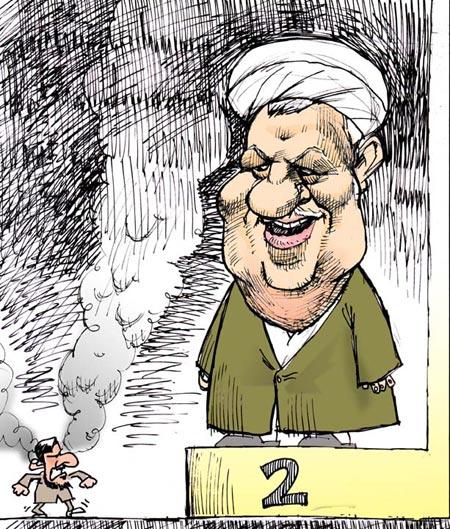 A note from the indefatigable and ever-thoughtful Nasrin Alavi, author of "We Are Iran: The Persian Blogs":
Hi Chris,
This is stranger than Ahmadi’nejad’s election victory. Iran's Rafsanjani given more powers. Basically the supreme leader of Iran has transferred some of his powers over to Rafsanjani. It is completely baffling in the light of what’s gone on recently. Has he been given more powers to curb Ahmadi’nejad and the new parliament who want to make a stand on the nuclear issue? Did the threat of Security Council referral work?
Or if I go into my Iranian conspiracy mode… Is Khamanei dying? What has Rafsanjani got on him that made him transfer his power?
Best
N
I don't have the answers, of course. I'm not sure anyone does outside the Iranian Inner Circle, but these are questions well worth asking. One should also consider the source cited by the original AFP dispatch, Mohsen Rezai. He now serves as secretary of the Expediency Council but made his rep, as it were, heading the Islamic Revolution Guard Corps from 1981 to 1997. Rezai is a man with ample ambition of his own, and his remarks about a power shift could be part of his personal strategy. As always, the Inner Circle is all about wheels within wheels. - CD
Cartoon by Nick'Ahang Kowsar, who's a very recently exiled talent, according to Alavi.
Guantanamo: The Saudi Home Front
In America's Shadow
His brother is being held virtually incommunicado in Guantanamo. But Abdullah al-Juaid still has faith in Allah, and (maybe) the U.S. justice system
By Faiza Saleh Ambah, Sunday, October 2, 2005
...The life of Abdullah al-Juaid can be divided into two distinct parts: the period since his brother was taken to Guantanamo Bay in January 2002, and the 31 years before that. The split was sudden, sucking him out of his quiet pastoral life in the mountain city of Taif, pitting him against the world's most powerful nation and placing him in the middle of a major Supreme Court ruling against the U.S. government. ...
A very nuanced article from The Washington Post looking at the case of a Saudi detainee, his family, and the world from which they come, by Faiza Ambah, a woman who is one of the most talented journalists in the Kingdom and the region. - CD
His brother is being held virtually incommunicado in Guantanamo. But Abdullah al-Juaid still has faith in Allah, and (maybe) the U.S. justice system
By Faiza Saleh Ambah, Sunday, October 2, 2005
...The life of Abdullah al-Juaid can be divided into two distinct parts: the period since his brother was taken to Guantanamo Bay in January 2002, and the 31 years before that. The split was sudden, sucking him out of his quiet pastoral life in the mountain city of Taif, pitting him against the world's most powerful nation and placing him in the middle of a major Supreme Court ruling against the U.S. government. ...
A very nuanced article from The Washington Post looking at the case of a Saudi detainee, his family, and the world from which they come, by Faiza Ambah, a woman who is one of the most talented journalists in the Kingdom and the region. - CD
Sunday, October 02, 2005
Newsweek Iraq: No More Illusions
Newsweek's team in Baghdad, Basra and Washington just published this very measured, very solid piece about why and how Iraq is coming apart:
No More Illusions
Americans used to dream of building a strong, unified, pluralistic Iraq. Now the possibilities are a very loose federation, or violent disintegration.
By Scott Johnson, Babak Dehghanpisheh and Michael Hastings
Newsweek
Oct. 10, 2005 issue - For more than a decade, Abu Sajad's small convenience store was a fixture in Doura, an industrial neighborhood in south Baghdad. Customers came for friendly service and the ease of buying rice, tea or cigarettes a few blocks from home. Abu Sajad, a 44-year-old with salt-and-pepper hair, would even let regulars—Sunnis, Shiites or Christians—run up a tab. But not long ago, Abu Sajad was found in a pool of his own blood. Sunni insurgents had shot him 11 times with an AK-47. Shortly afterward, his widow and four children left for Karbala, a Shiite town in the south. His brother, Abu Naseer, decided to move to Al Kurayat, a predominantly Shiite neighborhood in eastern Baghdad. The Doura shop was closed, another debris-strewn relic of an Iraq that may no longer exist. "I have no reason or explanation why he was killed except that he was Shiite," says his brother....
For more background see the recent ICG report "Unmaking Iraq," earlier posts on The Shadowland Journal, and my column "Make or Break" from November of last year. - CD
No More Illusions
Americans used to dream of building a strong, unified, pluralistic Iraq. Now the possibilities are a very loose federation, or violent disintegration.
By Scott Johnson, Babak Dehghanpisheh and Michael Hastings
Newsweek
Oct. 10, 2005 issue - For more than a decade, Abu Sajad's small convenience store was a fixture in Doura, an industrial neighborhood in south Baghdad. Customers came for friendly service and the ease of buying rice, tea or cigarettes a few blocks from home. Abu Sajad, a 44-year-old with salt-and-pepper hair, would even let regulars—Sunnis, Shiites or Christians—run up a tab. But not long ago, Abu Sajad was found in a pool of his own blood. Sunni insurgents had shot him 11 times with an AK-47. Shortly afterward, his widow and four children left for Karbala, a Shiite town in the south. His brother, Abu Naseer, decided to move to Al Kurayat, a predominantly Shiite neighborhood in eastern Baghdad. The Doura shop was closed, another debris-strewn relic of an Iraq that may no longer exist. "I have no reason or explanation why he was killed except that he was Shiite," says his brother....
For more background see the recent ICG report "Unmaking Iraq," earlier posts on The Shadowland Journal, and my column "Make or Break" from November of last year. - CD
Polemic: RFK Jr. Cuts Loose
The no-holds-barred speech by Robert F. Kennedy Jr. at the Sierra Summit in San Francisco, sponsored by the Sierra Club, is all over the blogosphere. Its focus is the environment, and the depredations wrought by President Bush. But RFK also turns on the generally supine America media and, by implication, on the remarkably passive public:
The [network] news departments have become corporate profit centers. They no longer have any obligation to benefit the public interest; their only obligation is to their shareholders, and they fulfill that obligation by increasing viewership. How do you do that? Not by reporting the news that we need to hear to make rational decisions in our democracy but, rather, by entertaining us, by appealing to the prurient interests that all of us have in the reptilian core of our brain for sex and celebrity gossip. [applause] So they give us Laci Peterson and Michael Jackson and Kobe Bryant, and today we're the best-entertained and the least-informed people on the face of the earth. This is a real threat to American democracy.
I love that line I boldfaced. But there's more:
...We have a negligent and indolent media and press in this country which has absolutely let down American democracy. [applause] All this rightwing propaganda, which is planned and organized and has dominated this country, the political debate for so many years is talking about a liberal media. Well, you know and I know that there is no such thing as a liberal media in the United States of America. There is a rightwing media, and if you look for where most Americans are now getting their news, that's where they're getting it. According to Pew, 30 percent of Americans now say that their primary news source is talk radio, which is 90 percent dominated by the right. Twenty-two percent say their primary news source is Fox News, MSNBC, or CNBC, all dominated by the right, and another 10 percent, Sinclair Network, which is the most rightwing of all. That's the largest television network in our country. It's run by a former pornographer who requires that all 75 of his affiliate television stations -- and this is where Midwesterners get their news, where red-state people get their news -- that all of them have to take a pledge not to report critically about this President or about the war in Iraq.
I am sure many exaggerations and inaccuracies will be found, but the speech sets a standard for Democratic rhetoric that's likely to be with us for a while, and it's worth reading in its entirety: http://www.sierraclub.org/pressroom/rfkspeech/. - CD
The [network] news departments have become corporate profit centers. They no longer have any obligation to benefit the public interest; their only obligation is to their shareholders, and they fulfill that obligation by increasing viewership. How do you do that? Not by reporting the news that we need to hear to make rational decisions in our democracy but, rather, by entertaining us, by appealing to the prurient interests that all of us have in the reptilian core of our brain for sex and celebrity gossip. [applause] So they give us Laci Peterson and Michael Jackson and Kobe Bryant, and today we're the best-entertained and the least-informed people on the face of the earth. This is a real threat to American democracy.
I love that line I boldfaced. But there's more:
...We have a negligent and indolent media and press in this country which has absolutely let down American democracy. [applause] All this rightwing propaganda, which is planned and organized and has dominated this country, the political debate for so many years is talking about a liberal media. Well, you know and I know that there is no such thing as a liberal media in the United States of America. There is a rightwing media, and if you look for where most Americans are now getting their news, that's where they're getting it. According to Pew, 30 percent of Americans now say that their primary news source is talk radio, which is 90 percent dominated by the right. Twenty-two percent say their primary news source is Fox News, MSNBC, or CNBC, all dominated by the right, and another 10 percent, Sinclair Network, which is the most rightwing of all. That's the largest television network in our country. It's run by a former pornographer who requires that all 75 of his affiliate television stations -- and this is where Midwesterners get their news, where red-state people get their news -- that all of them have to take a pledge not to report critically about this President or about the war in Iraq.
I am sure many exaggerations and inaccuracies will be found, but the speech sets a standard for Democratic rhetoric that's likely to be with us for a while, and it's worth reading in its entirety: http://www.sierraclub.org/pressroom/rfkspeech/. - CD
Thursday, September 29, 2005
Shadowland: Guilt by Association
A Spanish court has jailed the reporter who interviewed bin Laden after 9/11. What his conviction says about the dangerous ambiguities of pursuing journalistic balance in an age of terror.
WEB-EXCLUSIVE COMMENTARY
By Christopher Dickey
Newsweek
Updated: 4:10 p.m. ET Sept. 29, 2005
Sept. 29, 2005 - When I asked the waiter for a glass of wine, I saw the man across the table from me recoil ever so slightly, as if I were testing him. Which, in a way, I was. We were ordering lunch in the old Jewish quarter of Granada, Spain, at the Torquato Restaurant (his choice). Across a narrow valley the palace and the paradisiacal gardens of the Alhambra stood as tribute to the glories of the Muslim caliphate that ruled this part of Europe for more than 700 years. But I hadn’t come for historical tourism on that afternoon of Jan. 11, 2001. I had been working to set up a meeting in faraway Afghanistan with a reputed terrorist mastermind named Osama bin Laden. I’d been told that my luncheon guest, Tayseer Alouni, a naturalized Spaniard whose family lived in Granada but who worked for Al-Jazeera television in Kabul, might have the connections to make that happen.
Indeed. On Monday of this week a Spanish court sentenced the Syrian-born Alouni to seven years in prison after convicting him of collaborating with Al Qaeda. At the same trial, 17 other alleged members of an Islamist cell, part of which prosecutors linked to planning for the September 11 attacks on the United States, received sentences ranging up to 27 years. ...
WEB-EXCLUSIVE COMMENTARY
By Christopher Dickey
Newsweek
Updated: 4:10 p.m. ET Sept. 29, 2005
Sept. 29, 2005 - When I asked the waiter for a glass of wine, I saw the man across the table from me recoil ever so slightly, as if I were testing him. Which, in a way, I was. We were ordering lunch in the old Jewish quarter of Granada, Spain, at the Torquato Restaurant (his choice). Across a narrow valley the palace and the paradisiacal gardens of the Alhambra stood as tribute to the glories of the Muslim caliphate that ruled this part of Europe for more than 700 years. But I hadn’t come for historical tourism on that afternoon of Jan. 11, 2001. I had been working to set up a meeting in faraway Afghanistan with a reputed terrorist mastermind named Osama bin Laden. I’d been told that my luncheon guest, Tayseer Alouni, a naturalized Spaniard whose family lived in Granada but who worked for Al-Jazeera television in Kabul, might have the connections to make that happen.
Indeed. On Monday of this week a Spanish court sentenced the Syrian-born Alouni to seven years in prison after convicting him of collaborating with Al Qaeda. At the same trial, 17 other alleged members of an Islamist cell, part of which prosecutors linked to planning for the September 11 attacks on the United States, received sentences ranging up to 27 years. ...
Iraq: Suicide Notes
Anyone who's read much Jihadist literature will be struck by the weirdly chivalric tone of it. These guys love to see themselves as heirs of Salah el-Din, whose knights fought and defeated the Crusaders to re-take Jerusalem. If you've seen Ridley Scott's "Kingdom of Heaven," it will give you some notion of that vision. There's much of the same spirit in the biographies sketched by this fascinating New Republic article:
THE ONLINE BIOS OF IRAQ'S "MARTYRS."Suicidologyby Husain Haqqani & Daniel Kimmage Post date 09.26.05 Issue date 10.03.05
n 2003, a 26-year-old Moroccan who called himself Abu Osama Al Maghribi took the proceeds from the restaurant he owned with his father in Tangier and went to Baghdad. There, Al Maghribi, who named his own son Osama in honor of Osama bin Laden, turned a car purchased with his restaurant money and the sale of a plot of land he owned into a weapon of jihad. A friend who accompanied him describes what happened: "Abu Osama came back and got his bride--his car--and flew ahead of me. I was behind him, in my car. There was a lot of traffic, and he started to maneuver between the cars as though he were on a race track going for first place. I couldn't keep up. My strength flagged, I stopped the car, and I cried. I saw him pulling away from me and drawing nearer to his target. His heart grew still to tear out the criminal hearts. He will be blessed, and the criminals will face hardship; he will rise, and they will fall. I saw a column of smoke rise 20 meters into the sky amid a deafening roar. He felled 50 infidels."
This account comes from "The Martyrs of the Land of the Two Rivers," a collection of 430 biographies of insurgents who are connected by conviction, if not organization, to a global jihad symbolized by Al Qaeda. As suicide bombings--not to be confused with other insurgent groups like Sunni Baathists--continue to rock Iraq on an almost daily basis (including a dozen that took place on a single day, September 14), these biographies provide the most extensive account thus far of how these jihadists see their mission. ...
THE ONLINE BIOS OF IRAQ'S "MARTYRS."Suicidologyby Husain Haqqani & Daniel Kimmage Post date 09.26.05 Issue date 10.03.05
n 2003, a 26-year-old Moroccan who called himself Abu Osama Al Maghribi took the proceeds from the restaurant he owned with his father in Tangier and went to Baghdad. There, Al Maghribi, who named his own son Osama in honor of Osama bin Laden, turned a car purchased with his restaurant money and the sale of a plot of land he owned into a weapon of jihad. A friend who accompanied him describes what happened: "Abu Osama came back and got his bride--his car--and flew ahead of me. I was behind him, in my car. There was a lot of traffic, and he started to maneuver between the cars as though he were on a race track going for first place. I couldn't keep up. My strength flagged, I stopped the car, and I cried. I saw him pulling away from me and drawing nearer to his target. His heart grew still to tear out the criminal hearts. He will be blessed, and the criminals will face hardship; he will rise, and they will fall. I saw a column of smoke rise 20 meters into the sky amid a deafening roar. He felled 50 infidels."
This account comes from "The Martyrs of the Land of the Two Rivers," a collection of 430 biographies of insurgents who are connected by conviction, if not organization, to a global jihad symbolized by Al Qaeda. As suicide bombings--not to be confused with other insurgent groups like Sunni Baathists--continue to rock Iraq on an almost daily basis (including a dozen that took place on a single day, September 14), these biographies provide the most extensive account thus far of how these jihadists see their mission. ...
Dealing in Death
Web site: U.S. troops traded Iraq photos for porn access
No evidence of felony, Army says
From Barbara Starr
CNN Washington Bureau
Wednesday, September 28, 2005; Posted: 1:54 p.m. EDT (17:54 GMT)
WASHINGTON (CNN) -- The U.S. Army is investigating reports that troops took photographs of dead Iraqis and traded them to a pornographic Web site in return for access to that site, Army sources said Wednesday...
Given the reluctance of the American government and most media to show the corpses of the war's victims, and the inclination of the American public to change the channel if they do, there is something horribly appropriate about the way these soldiers and that site came to equate cadavers and pornography. -- CD
No evidence of felony, Army says
From Barbara Starr
CNN Washington Bureau
Wednesday, September 28, 2005; Posted: 1:54 p.m. EDT (17:54 GMT)
WASHINGTON (CNN) -- The U.S. Army is investigating reports that troops took photographs of dead Iraqis and traded them to a pornographic Web site in return for access to that site, Army sources said Wednesday...
Given the reluctance of the American government and most media to show the corpses of the war's victims, and the inclination of the American public to change the channel if they do, there is something horribly appropriate about the way these soldiers and that site came to equate cadavers and pornography. -- CD
Subscribe to:
Posts (Atom)