Sunday, November 06, 2005

Riots: Is Paris Burning? No, But France Is

From the latest edition of Newsweek International. (A shorter version is running in the U.S. edition):

Newsweek International: The Fire This Time, 6 Nov 2005
Years of racism and neglect explode in a week of riots across France's mostly Muslim immigrant ghettos. http://www.msnbc.msn.com/id/9938406/site/newsweek/

By Christopher Dickey
Newsweek International
Nov. 14, 2005 issue - Word of the deaths spread quickly through Clichy-sous-Bois, a grim collection of housing projects an hour by train and bus from the center of Paris. Two teenage boys had been electrocuted while trying to hide near a transformer. Rumor said they were running from police. Soon, dozens of angry young men came from the soulless high-rises looking for cops to fight and cars to burn on streets named, as it happens, for heroes of French culture: Boulevard Emile Zola, Allee Albert Camus, Rue Picasso. Dead white men. "It's Baghdad here," the rioters shouted. By the end of that first night, Oct. 27, police would count 15 cars torched and six arrests. No firefighters or cops were injured and authorities claimed the situation was stabilized. But they were very wrong.

Night after night last week rage spread through the ghettos that ring Paris, then beyond—to the slums of Dijon in Burgundy, Rouen in Normandy, Toulouse, Rennes, Marseilles. When, on the fourth night, a tear-gas canister exploded near the entrance to a warehouselike mosque in Clichy-sous-Bois, forcing hundreds of worshipers to flee barefoot and gagging into Place Anatole France, a new cry went up from the vandals. "Now this is war," said one. Others cried "jihad."

It was neither, in fact, and the Paris known to tourists was not burning. It was far from the city center that cars and dumpsters were incinerated, buses attacked with Molotov cocktails and hundreds of arrests made. Police said gangs were increasingly organized, using the Internet and cell-phone text messages to coordinate. Dozens of people were injured and shots were fired at police; on Friday night alone nearly 900 cars were torched nationwide. But at the weekend, no one had been killed. The Los Angeles riots of 1992, by contrast, claimed the lives of more than 50 people.

What has shaken the French government, and badly, is its continued inability to contain the metastasizing anger spreading through the country's many predominantly Muslim ghettos. Like a Middle Eastern intifada, the violence is stripping away whatever comfortable assumptions existed about the authorities' ability to cope. Decades of French policies intended to force the integration of immigrants and their children into French society are seen to have failed, and in the age of terror, the fear is that rage like this will swell the ranks of radical Islamists in the heart of Europe. For years, itinerant preachers have moved through these same communities recruiting for holy wars in Bosnia, Chechnya and now Iraq, where a few young French Muslims have gone to die as suicide bombers. Madrid and London have shown what happens when that sort of fury is turned inward. ...

http://www.msnbc.msn.com/id/9938406/site/newsweek/


Also worth a look is Tracy McNicoll's onscener from earlier in the week.

Eric Pape, Marie Valla, Carla Power, Tracy and I have written a great deal about Muslims in Europe over the last few years. Some of the more interesting and useful articles:

Newsweek Intl: Immigration: At the Gates, 16 Oct 2005
As the European Union expands, it's coming face to face with the new world.

Newsweek: Jihad Express, 13 Mar 2005
For Islamic Militants in Europe, Iraq far outshines Afghanistan as an urban-terrorism training ground

Newsweek Intl: The New Crusade, 1 Nov 2004
Fighting for God in a secular Europe, conservative Christians, the Vatican and Islamic militants finda a common cause.

Newsweek Intl: Europe's Southern Shadow, 11 Oct 2004
Immigration from North Africa is the problem of the coming decade

Newsweek Intl: The Return of Hate, 1 Mar 2004
Anti-Semitism, fueled by an angry minority, is on the rise. But the real problem is that no one seems to care.

Newsweek Intl: Generation M, 1 Dec 2003
Europe: A young generation of homegrown Muslims is challenging the region’s self-image

Piracy: Cruise Ships and Al Qaeda

Talk about adventure vacations. I particularly like this version of the Seabourn Spirit saga as told in an e-mail from one of the retired American couples aboard:

Oakmont couple recounts pirate attack of their cruise ship
Associated Press (published in the San Jose Mercury)

A local couple aboard a luxury cruise liner targeted by armed pirates off the east African coast Saturday recounted the terrifying moments as the bandits tried to board the ship in an e-mail to friends and family.

Two boats full of pirates, armed with grenade launchers and machine guns, approached the Seabourn Spirit about 100 miles off the Somali coast and opened fire while the bandits tried to get onboard, according to the Miami-based Seabourn Cruise Line, a subsidiary of Carnival Corp.

But the captain "swerved the ship sharply to the left trying unsuccessfully to ram the oncoming boat and then took off at full speed," Harry and Jan Hufford, of Oakmont, said in the e-mail obtained Saturday by The Press Democrat of Santa Rosa.

The couple, both retired Southern California government officials, wrote home shortly after the attack to assure loved ones that they were OK. None of the 151 passengers abroad the ship were injured, but one member of the 161-person crew was injured by shrapnel, cruise officials said.

According to the Huffords, the captain told passengers over the public address system around 5:30 a.m. "that a boat with armed men was coming along the starboard side and we were to lock ourselves in our cabins."

The captain later instructed passengers to gather in the ship's restaurant, and as the Huffords were leaving their cabin, they heard a heavy thud, the e-mail said. A rocket had hit a cabin nearby, "but it jammed in the metal balcony door frame and shattered the glass but fortunately exploded downward," it said.

"There are bullet holes at several locations and two of the floor-to-ceiling windows in the lounge at the rear of the ship were shattered by bullets," the Huffords wrote.

The Spirit, which sustained minor damage, was bound for Mombasa, Kenya, at the end of a 16-day voyage from Alexandria, Egypt. It was expected to reach the Seychelles on Monday, and then continue on its previous schedule to Singapore, company officials said.


The Seabourn Spirit's attackers are being deemed incompetent pirates, and indeed they may have been. (One has to admire the sang-froid of the Spirit's captain, first trying to run them over, then simply outrunning them.) But the possible nexus between piracy and terrorism on the high seas is a huge concern. Al-Qaeda itself has a long record of naval operations. The most successful was the suicide attack on the USS Cole in Aden harbor on October 12, 2000, which killed 17 people and injured 39. But there was also a successful attack on the French oil tanker Limburg off the coast of Yemen two years later, on October 6, 2002. As I reported in the very first Shadowland column, "Evil Genius," published February 20, 2003, Al Qaeda had planned a truly spectacular operation to take place on or about the same time as the attacks on the United States on September 2001. After the column appeared, based on foreign intelligence sources, those in the U.S. questioned the timing, but not the plans or intent. I'm posting the relevant bits here since there's no longer a live link to the original on the Newsweek site:

As described to NEWSWEEK for the first time by foreign officials who work closely with the CIA, the aim was to sink a U.S. warship with everyone aboard, and the scenario was every bit as grand and complicated as something out of an old James Bond movie. Through a front company, Al Qaeda actually bought a large
freighter equipped with a heavy-duty crane. It also bought several small speedboats from a manufacturer in the United Arab Emirates. The plan was to carry the smaller craft on the mother ship, fill them with explosives, lower them into the water and send them on their way toward the warship as, in effect,
suicide torpedoes. If those failed—and they would have been vulnerable to defensive fire if the ship’s crew was alert—the freighter itself was filled with explosives, making it the biggest conventional bomb ever built. It wouldn’t have to ram the warship to sink it, just explode nearby. According to these
officials, most of the crew on the Al Qaeda freighter didn’t even know what was going on. Some were from Pakistan, others from India. A few were Christians.

The head of this operation was Abd al-Rahim al-Nashiri, who played a key operational role in putting together the bombings of the U.S. embassies in Kenya and Tanzania in 1998 and blowing an enormous hole in the side of the American destroyer USS Cole in Yemen in 2000, killing 17 American sailors. “Nashiri does
his job very patiently,” says an Arab intelligence officer with intimate knowledge of the case. “Nairobi was three years in the planning.”

So what happened? By one account, Nashiri had trouble getting the enormous quantity of explosives needed for the Hormuz plot. But this intelligence officer says no: “It was all to do with the timing and the moving of the elements. The problem was security procedures.” The more grandiose a plan, the more people who
are involved, the greater the chance it will be compromised and some or all of the plotters caught. Nashiri knew he was already being hunted by the CIA. Jordan’s intelligence service had been tracking him since 1997. Rather than risk giving away the whole game—possibly the whole 9-11 plot—the operation was called
off.

Even after Al Qaeda’s Afghan base was broken up by the U.S. invasion in 2001, Nashiri—also known as Mullah Bilal—kept plotting seaborne operations, training frogmen for underwater demolition and pilots for small kamikaze aircraft. A group of Saudis was dispatched to Morocco to prepare the logistics for an attack on U.S. warships in the Strait of Gibraltar. Their mission was to rent a safe house and acquire Zodiac rubberized speedboats to use in a hit similar to the one against the Cole. But a tip from one of the Moroccans held at Guantanamo in early 2002 led to the arrest of the plotters by the Moroccan security services.

Nashiri tried to change his strategy. Like other Al Qaeda planners, he scaled back the grand plans and focused on what he thought would be easier targets: attacks on American compounds in the northwest of Saudi Arabia and in Jeddah. But those plots were foiled. Too many people knew about him. Too many of the
Arab services, as well as the Americans, were on his trail.

Late last year, Nashiri was spotted in Yemen, but the Yemenis didn’t arrest him. He went to Dubai and was picked up there. Ever since, Nashiri has been in one of the secret CIA interrogation centers outside the United States, beyond the reach of American law or mercy. According to intelligence sources familiar with his dossier, he’s been quite talkative. By combining what Nashiri has told them with details from other captured masterminds like Abu Zubaydah (none of whose
whereabouts are a matter of public record) the CIA can cross-check information, spot inconsistencies, and expand its web of coverage.

So we’re all a lot safer? Yes, in fact.

Safer. But not safe.

“The elements who worked with Nashiri, they have the same expertise,” says the counterterror chief of a friendly country. “When Nashiri was arrested they became more determined than ever to take his place.” They are also more determined than ever to get weapons of mass destruction. The acquisition is very
risky from an operational point of view. The terrorists have to go outside their closed and secure networks if they want nukes, plutonium or sophisticated chemical and biological weapons, and that exposes them to capture. But there’s this great advantage: once you’ve got the Bomb or its bio-chem equivalent, you
don’t have to be a genius to use it. You just have to be evil.

Thursday, November 03, 2005

Iran: The Purges Go Global

Following up on Nasrin Alavi's post from a few days back:

The Associated Press, Reuters
THURSDAY, NOVEMBER 3, 2005

Tehran--Iran's hard-line government said Wednesday that it was removing 40 ambassadors and senior diplomats, including supporters of warmer ties with the West, in a shake-up that coincides with a more confrontational international stance by Iran.
The move gives the new government of President Mahmoud Ahmadinejad the chance to purge officials favoring change who were brought in by his predecessor, Mohammad Khatami, and to install its own supporters. ...

The original post: Iran: Picking Fights on Purpose?

Shadowland: The Looking-Glass Wars

The latest column:

Shadowland: The Looking-Glass Wars, 2 Nov 2005
The Middle East has long been home to a 'murdering class.' Americans must avoid sliding into this moral morass. http://www.msnbc.msn.com/id/9899874/site/newsweek/

Nov. 2, 2005 - He ate raw meat at our late lunch among a wilderness of mirrors. My guest, an Arab spymaster in Lebanon for most of the 1975-90 civil war, had chosen to meet in Paris at one of those opulent hotels where fashion shows are held. Haute couture designers like these places, as do high-living spies, because the gilt-framed mirrors on the walls let the knowing see everything and everybody from many different angles. As we talked about car bombs, the hotel staff was setting up chairs for a défilé. Over steak tartare, we discussed the murder of former Lebanese prime minister Rafik Hariri and 22 other people on the Beirut waterfront last Valentine’s Day.

It occurred to me that this guy in this place and, for that matter, eating this particular food while talking about this particular subject epitomized that cool and frightening detachment from horror that is so typical of a certain class in the Middle East: the murdering class. I have met Arabs, Iranians, Israelis--Muslims, Christians and Jews--who fit that description and know the etiquette. Unlike Al Qaeda’s apocalyptic lunatics, these are mostly government officials or their proxies who use murder to make points in the Middle East’s brutal political dialogues. "It's an ongoing game, playing by the rules of the Bible," a senior official in Israeli intelligence once told me, "and at a certain point there is a balance of terror where everyone knows what's expected."...

... A lot of evidence suggests we’re growing hardened. The abuses at Guantanamo, Abu Ghraib and Bagram show how easily Americans can slide into the mores of the Middle East and its murdering class. The longer we stay, the more often we should remind ourselves that “an ongoing game, playing by the rules of the Bible,” is not the same as the rule of law. Not at all.

http://www.msnbc.msn.com/id/9899874/site/newsweek/

------

If further proof were needed, The Washington Post, the New York Times and the Independent have all run front page stories in the last few days looking at the West's slide toward the mindset of the Middle East. The most striking piece is Dana Priest's in the Post:

CIA Holds Terror Suspects in Secret Prisons
Debate Is Growing Within Agency About Legality and Morality of Overseas System Set Up After 9/11

By Dana Priest
Washington Post Staff Writer
Wednesday, November 2, 2005; A01

The CIA has been hiding and interrogating some of its most important al Qaeda captives at a Soviet-era compound in Eastern Europe, according to U.S. and foreign officials familiar with the arrangement.

The secret facility is part of a covert prison system set up by the CIA nearly four years ago that at various times has included sites in eight countries, including Thailand, Afghanistan and several democracies in Eastern Europe, as well as a small center at the Guantanamo Bay prison in Cuba, according to current and former intelligence officials and diplomats from three continents.

The hidden global internment network is a central element in the CIA's unconventional war on terrorism. It depends on the cooperation of foreign intelligence services, and on keeping even basic information about the system secret from the public, foreign officials and nearly all members of Congress charged with overseeing the CIA's covert actions.

The existence and locations of the facilities -- referred to as "black sites" in classified White House, CIA, Justice Department and congressional documents -- are known to only a handful of officials in the United States and, usually, only to the president and a few top intelligence officers in each host country....

-----

NYT: The Bush administration is embroiled in a sharp internal debate over whether a new set of Defense Department standards for handling terror suspects should adopt language from the Geneva Conventions prohibiting "cruel," "humiliating" and "degrading" treatment, administration officials say.

Independent: Tony Blair's plans for tough new anti-terror legislation have been subjected to a damning critique by Amnesty International, as MPs prepare to debate the measures today. In a submission to MPs, Amnesty International denounced the proposals to increase police powers of detention and make a new offence of the glorification of terrorism. It called them "ill-conceived and dangerous" , amounting to an attack on "the independence of the judiciary and the rule of law".

Monday, October 31, 2005

Iraq-Niger-WMD: Oblivious to the Obvious

The inclination of the Bush administration to ignore the obvious is now well known. But, still, as more details come out about the great WMD debate inside the bureaucracy before the war, you have to shake your head. Joe Wilson's letter to the Senate Intelligence Committee last year refuting some of the assertions in the "additional comments" section of the report about his role in the Niger uranium inquiries includes a succinct chronology of the administration's self-deception. I find the following items particularly revealing:

  • On October 6, 2002, the CIA sent a second fax to the White House which said, "more on why we recommend removing the sentence about procuring uranium oxide from Africa: Three points 1) the evidence is weak. One of the two mines cited by the source as the location of the uranium oxide is flooded. The other mine cited by the source is under the control of the French authorities. 2) the procurement is not particularly significant to Iraq's nuclear ambitions because the Iraqis already have a large stock of uranium oxide in their inventory. And 3) we have shared points one and two with Congress, telling them that the Africa story is overblown and telling them this in one of the two issues where we differed with the British." (Pg 56)

The war party in the administration saw such reservations as pusillanimous, and there is more than a whiff of CYA gas in the tone of that note. But whether such common sense arguments were firm or feeble, the administration just wasn't listening. (See Maureen Dowd's devastating critique of Cheney's clique and "that incestuous, secretive, vindictive, hallucinatory dark hole they've been bunkered in for five years.") Although U.N. inspections of Iraq began again with a vengeance in late 2002, the Bush administration did not hand off the dubious dossier on Niger uranium to the International Atomic Energy Agency until late February 2003. The then-deputy director Jacques Baute determined within a few minutes that the documents were forgeries. IAEA Director General Mohamed ElBaradei (now a nobel laureate) reported this to the U.N. Security Council on March 7, 2003. But there was no way the administration would stop its roll toward war at that point. The invasion of Iraq began less than two weeks later.

Iran: Picking Fights on Purpose?

The Associated Press is reporting that Iran's ruling class is split over the wisdom of President Mahmoud Ahmadi'nejad's boilerplate diatribe against Israel. It's "a disgraceful blot" that ought to be "wiped off the map," he said last Wednesday. After a general uproar at the United Nations, including calls that Iran be expelled for advocating the obliteration of a member state, Ahmadi'nejad claimed his line was exactly the same as the Ayatollah Khomeini's -- as if that made it better. Persian blogwatcher Nasrin Alavi sends this impassioned note:

Hello Chris,

Just when I thought it was impossible, Ahmadi’nejad has again outdone his hostile stance with vile comments that Israel “must be wiped out from the map of the world”.

Describing the annual Qods (Jerusalem) rally in Tehran CNN reported that “Thousands of Iranians staged anti-Israel protests across the country Friday and repeated calls by their ultraconservative president demanding the Jewish state's destruction.” The annual Qods rallies have been going on since the beginning of the revolution (1979), when ayatollah Khomeini, declared that the last Friday of the month of Ramadan would be marked as a day in solidarity with the Palestinian people. Ahmadi’nejad and his ilk surely remember those early days when hundreds of thousands (not thousands) of Iranians would willingly join the march. Despite the headlines, the rally this year was a total flop and a pathetic show in the face of the harassment and pressures on state employees, civil servants, members of the armed forces, teachers, factory workers and students to attend.

Ahmadi’nejad beaming fearlessly now tells the outside world that "My word is the same as that of (the) Iranian nation". But in reality he is having difficulty even speaking on behalf of the regime’s inner circle. There are now rumours that a significant number of Iranian ambassadors are to lose their jobs, including key regime figures such as Zarif at UN, Adeli in London, Kharazi in Paris, Kharghani in Germany and Alborzi at the UN, Geneva.

Things aren’t going that great for our bolshie president even in Iran’s’ hardline-dominated parliament. Back in August four of his proposed cabinet ministers were rejected by parliament and months after his election victory, he has yet to fill four vacant ministerial posts.

The former revolutionary guard’s campaign pledge of social justice and distributing oil money to the poor remains increasingly unrealistic and may eventually bring about utter disappointment even from the regime’s core supporters. The new parliament has to date announced plans to reduce subsidies on the sale of imported petrol, bread and cement. Some are already reporting the beginning of the end for Iranian president's honeymoon period’.

The sabre rattling of fanatics as ever is also drowning out Iran’s active pro-democracy voices. Only a few days ago (26 October) at a gathering of over a thousand people (that included the elected heads of Iran’s’ largest nationwide student union Tahkim Vahdat) Mohsen Kadivar in a speech directly addressed ayatollah Khamanei, the leader of Iran and asked, "a symbol of freedom is for your opponents and those that criticise you to be safe in this society otherwise merely talking of social justice is easy... Why are Ganji, Soltani and Zarafshan still in jail? Kadivar added, “I ask the security officers who are at present amongst us to take my words to the leader...”

Amnesty International reported grave concern about the safety of Akbar Ganji Iran’s longest serving imprisoned journalist. According to Massoumeh Shafii, his wife, he had been severely beaten by Iranian security officers who wanted him to apologise in writing for his books and letters, and to undertake not to give interviews if he was to be granted prison leave.

It may be hard to believe but our former revolutionary guard president fears such speeches and the writings of activist like Ganji more than any US threat. He beams triumphantly like never before as he takes questions from the press about Israel and the US. Men like him thrive on war and their whole existence is based on conflict. They know that their power base will be strengthened, because even those Iranians who oppose them will move to their camp in defence against foreign aggression. They also know that they can put down dissenters with more force than ever before.

Writer and journalist Ahmad Zeidabadi, a one-time cellmate of Akbar Ganji, has said the Ganji is “a South Tehran [working class] stubborn lad that will fight any force or harassment.” Ahmadi’nejad became president on the backing of the noble south Tehran poor. He has promised them prosperity and jobs. He is more fearful of a confrontation with the great and good lads of South Tehran than any dirty war with the West.

Best

NA


Saturday, October 29, 2005

Libby: Snow Falling on Aspens

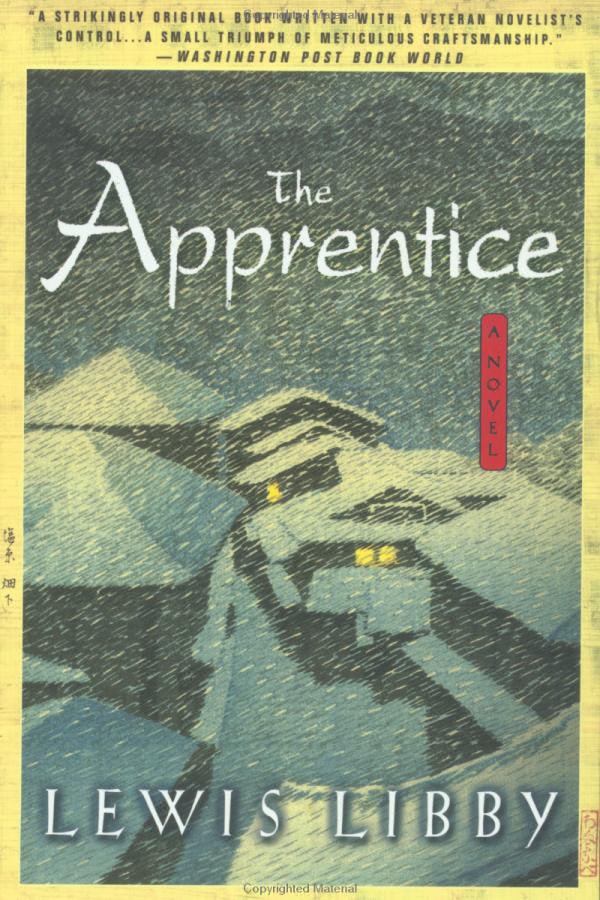
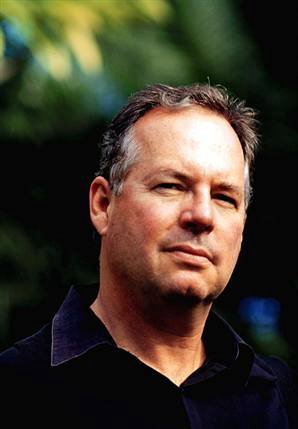
Lewis Libby, the now-former chief of staff and national security adviser to Vice President Dick Cheney, published a novel in 2001, the year he moved into the Old Executive Office Building. Called “The Apprentice,” it has nothing to do with Donald Trump. It’s set in a snowbound inn in 1903 Japan during a smallpox epidemic. An itinerant troupe of performers has just arrived, perhaps bringing the plague with them. The apprentice is a young man who must run the inn when the owners are away and the drama centers on his fascination with a girl among the performers. The style is spare and affects oriental naturalism. (Remember Libby's letter to Judy Miller? "Out West ... the aspens will already be turning. They turn in clusters, because their roots connect them." That sort of thing.)

The first pages, available on Amazon, make very strange reading this morning, like some allegory of the events that led to Libby’s indictment for allegedly lying about his interest in the identity of the nonofficially covered Valerie Plame Wilson: “He knew it was foolish to want to know the girl’s name. … But he wished to know the girl’s name.”

I particularly liked some of the "statistically improbable phrases," or SIPs, discovered by Amazon’s search engine. They give a random but revealing skim of weird images and perceptions from the prose of this man who helped shape the fictions that led us to war in Iraq: assistant headman, tiny dancer, man with the pole, mountain trousers, old samurai, lacquer workers, liquid woman, dead hunter, youth hesitated, charcoal maker, youth glanced, yellow fur, man with the club, youth nodded, youth stared, moment the youth, snow wall, young samurai.

One could almost confect a surreal little pseudo-Japanese poem:


Libby, assistant head man.
Libby, tiny dancer.
Libby, man with the pole.
Libby, mountain trousers.
Libby, old samurai.

Judy, lacquer worker.
Judy, liquid woman.
Judy, dead hunter.

Patrick, youth glanced.
Patrick, man with the club.
Patrick, youth nodded.
Patrick, youth stared.

White House, snow wall.
Patrick, young samurai.

- CD

Headline of the Day ...

Libby Lawyer Plans Lack-of-Memory Defense

Correspondents: Tom Masland, 1950-2005

My friend Tom Masland wrote about war, famine, epidemics and, whenever he could, hope. Most of his career, or the best-known part of it, was spent in the combat zones of the Middle East and Africa taking risks and, at least once in Liberia, getting wounded. But what Tom loved about his job wasn’t the adrenaline, it was the experience of mysterious and exotic corners of life hidden away in exotic places. When he was in Cairo, I remember, he used to stay in a house-boat hotel. On the road, which is where we usually were, Tom and I ran into each other in Beirut in the time of kidnapping and Kuwait when its shipping was under siege during the “Tanker War.” Once we met in Brazzaville as Mobutu’s regime was collapsing across the Congo River in Kinshasa. Tom was hanging out with a diamond merchant or smuggler, I wasn’t entirely sure which, and I remember that was the first time I ever heard the term “blue ground,” which is the kind of earth where raw diamonds are found.
Tom’s family was tremendously important to him. We talked often about our fathers and about his wife, Gina, and his three sons, who were always too far away from wherever it was that we were.
And Tom loved his music -- his jazz -- playing it and writing about it with great talent and quiet excitement. When Tom ended his assignment in Africa and moved back to the States last summer, he was looking forward to the time he’d be spending with those other loves and lives. And then, on a rainy night on the Upper West Side earlier this week, Tom was hit by the mirror of a passing SUV. As Tom fell, his head struck the pavement. On Thursday night he died in hospital.
Tom’s funeral is Sunday, and there will probably be a memorial service this summer, a pig roast on Maryland’s Eastern Shore, which he would have loved and which will give a lot of us a chance to celebrate his life. One of our friends says his ashes probably will be scattered on the Cheasapeake, which is fitting. But I cannot think of Tom without thinking of blue ground, and imagining him among the rough diamonds that are found there. - CD

Following are links to Newsweek’s tributes to Tom Masland:

Journalist, Jazzman, Gentleman
Thomas Wootton Masland: 1950-2005

By Rod Nordland
Newsweek
Nov. 7, 2005 issue - When our colleague Tom Masland stepped off the curb onto West End Avenue on the rainy night of Oct. 24, he had his funky little black bag over his left shoulder and his sax in a case in his right hand, and his life was about to end. He had just finished a gig at a Manhattan jazz club called Cleopatra's Needle, and was on his way to another performance downtown. In his day job, he had been a foreign correspondent and an editor for NEWSWEEK, occupations he had performed with such devotion and skill that many of us wouldn't know until he died how much else there was to him....
http://www.msnbc.msn.com/id/9862366/site/newsweek/


Highlights of Masland's Work:
http://www.msnbc.msn.com/id/9855425/site/newsweek/

Q&A: Masland on Life as a Correspondent
http://www.msnbc.msn.com/id/9854851/site/newsweek/

Photos: On Assignment in Africa
http://www.msnbc.msn.com/id/9855000/site/newsweek/

This is the conclusion of the Q&A after Tom was wounded in Liberia:

You have a wife and three kids; do you worry about going into these kinds of situations?

I do it extremely sparingly; I do the minimum of this kind of thing. And if I am going to do something like this, I get in and out. I don't work like the photographers. They really expose themselves to a lot more danger than I do. Obviously they have to get a clear line of sight for stuff that is happening, but, to me, it is worth it to witness what is actually happening because I see things that I wouldn't otherwise, in terms of the way Charles Taylor's fighters were performing. I got stuff I wouldn't have had by just going to hospitals to see the wounded brought in or taking another tack on covering this offensive. I mean, the effect on civilians is probably the most compelling aspect of the story, because the mortaring of these refugees who are packed into the other side of town was quite awful. But, at the same time, I felt I would gain something from going to and passing by the front there. So I thought it was worth taking a small risk, and I try to be very careful about it. There is a way of doing dangerous things carefully.

Photo by Louise Gubb

Shadowland Mail: Last Miller Missives

From Patty Gann
10/20/2005 3:00
Your article on the lessons learned from the miller story is one of the best articles i have read in a long time. you explained so much that i suspected but couldn't put all the pieces together.
i hope that you are wrong that americans don't want in-depth news. i sure want to be informed and most of my friends do also and we are continually frustrated by the lack of real news reported, especially on television. i'm am afraid of whats in store for our country's future if something doesn't change.
thanks again!
sincerely,
patty gann

From Gus Gonzales
Austin, TX
10/25/2005 12:04
Solid, prize-winning investigative reporting from the ground up. A critical mass of this kind of reporting could have slammed the brakes on the public's support for entering the war in 2002 and 2003. Bush and his legacy certainly will bear the weight of history for his mistakes. But he didn't do it alone. As a nation, America is ultimately responsible for the tragedy of good intentions that has been the Iraq War. We have reaped the bitter fruit of seeds sown years ago by our own insular minded arrogance, ignorance and pride. We stopped caring about the truth, preferring to proclaim it instead though the bombastic pronouncements of our leaders. They gave us what they thought would grant them power, and we went along. The mark of sin is upon all our heads. No one is innocent. And the judgment is meted out daily to those in Iraq who wear the uniform of our rapidly declining republic. They are in the Hell of our own making. For this, we have damned them, and ourselves, to ruin. This republic shall not soon last for the sins of its citizens. It will sleepwalk into its' own suicide. Millions of somnabulistic-minded Americans aid and abet the worst excesses of our political "leaders" when they demand simple answers to the big, complex, scary world out there. The sun has set on the American Dream. The languid moon soon rises over the American Nightmare, the sum of the nothingness in the national character, which once demanded truth to power. We will laugh ourselves into oblivion...

The original article:

Burning Questions
The Cannibalistic media frenzy over Judy Miller ignores the lessons we should be learning from here case. http://www.msnbc.msn.com/id/9742110/site/newsweek/

Tuesday, October 25, 2005

Mail: Keller, Miller et al

The role of New York Times reporter Judy Miller in the Plame affair continues to generate controversy. Just when you think the flames on her pyre are about to die down, someone – sometimes including Judy – does something to fan them back to life. At the end of the week, Times Editor Bill Keller sent a long e-mail to staffers. (See below.) Judy took umbrage at the word “entanglement,” among other things. I’m told she believes her reputation eventually will be vindicated because she spent 85 days in prison to stop the courts from launching a fishing expedition for her sources. You’ll recall that only Libby was identified. Our readers have some interesting things to say about that:

Colleagues,
As you can imagine, I've done a lot of thinking -- and a lot of listening -- on the subject of what I should have done differently in handling our reporter's entanglement in the White House leak investigation. Jill and John and I have talked a great deal among ourselves and with many of you, and while this is a discussion that will continue, we thought it would be worth taking a first cut at the lessons we have learned.
Aside from a number of occasions when I wish I had chosen my words more carefully, we've come up with a few points at which we wish we had made different decisions. These are instances, when viewed with the clarity of hindsight, where the mistakes carry lessons beyond the peculiar circumstances of this case.
I wish we had dealt with the controversy over our coverage of WMD as soon as I became executive editor. At the time, we thought we had compelling reasons for kicking the issue down the road. The paper had just been through a major trauma, the Jayson Blair episode, and needed to regain its equilibrium. It felt somehow unsavory to begin a tenure by attacking our predecessors. I was trying to get my arms around a huge new job, appoint my team, get the paper fully back to normal, and I feared the WMD issue could become a crippling distraction.
So it was a year before we got around to really dealing with the controversy. At that point, we published a long editors' note acknowledging the prewar journalistic lapses, and -- to my mind, at least as important - - we intensified aggressive reporting aimed at exposing the way bad or manipulated intelligence had fed the drive to war. (I'm thinking of our excellent investigation of those infamous aluminum tubes, the report on how the Iraqi National Congress recruited exiles to promote Saddam's WMD threat, our close look at the military's war-planning intelligence, and the dissection, one year later, of Colin Powell's U.N. case for the war, among other examples. The fact is sometimes overlooked that a lot of the best reporting on how this intel fiasco came about appeared in the NYT.)
By waiting a year to own up to our mistakes, we allowed the anger inside and outside the paper to fester. Worse, we fear, we fostered an impression that The Times put a higher premium on protecting its reporters than on coming clean with its readers. If we had lanced the WMD boil earlier, we might have damped any suspicion that THIS time, the paper was putting the defense of a reporter above the duty to its readers.
I wish that when I learned Judy Miller had been subpoenaed as a witness in the leak investigation, I had sat her down for a thorough debriefing, and followed up with some reporting of my own. It is a natural and proper instinct to defend reporters when the government seeks to interfere in our work. And under other circumstances it might have been fine to entrust the details -- the substance of the confidential interviews, the notes -- to lawyers who would be handling the case. But in this case I missed what should have been significant alarm bells. Until Fitzgerald came after her, I didn't know that Judy had been one of the reporters on the receiving end of the anti-Wilson whisper campaign. I should have wondered why I was learning this from the special counsel, a year after the fact. (In November of 2003 Phil Taubman tried to ascertain whether any of our correspondents had been offered similar leaks. As we reported last Sunday, Judy seems to have misled Phil Taubman about the extent of her involvement.) This alone should have been enough to make me probe deeper.
In the end, I'm pretty sure I would have concluded that we had to fight this case in court. For one thing, we were facing an insidious new menace in these blanket waivers, ostensibly voluntary, that Administration officials had been compelled to sign. But if I had known the details of Judy's entanglement with Libby, I'd have been more careful in how the paper articulated its defense, and perhaps more willing than I had been to support efforts aimed at exploring compromises.
Dick Stevenson has expressed the larger lesson here in an e-mail that strikes me as just right: "I think there is, or should be, a contract between the paper and its reporters. The contract holds that the paper will go to the mat to back them up institutionally -- but only to the degree that the reporter has lived up to his or her end of the bargain, specifically to have conducted him or herself in a way consistent with our legal, ethical and journalistic standards, to have been open and candid with the paper about sources, mistakes, conflicts and the like, and generally to deserve having the reputations of all of us put behind him or her. In that way, everybody knows going into a battle exactly what the situation is, what we're fighting for, the degree to which the facts might counsel compromise or not, and the degree to which our collective credibility should be put on the line."
I've heard similar sentiments from a number of reporters in the aftermath of this case.
There is another important issue surfaced by this case: how we deal with the inherent conflict of writing about ourselves. This paper (and, indeed, this business) has had way too much experience of that over the past few years. Almost everyone we've heard from on the staff appreciates that once we had agreed as an institution to defend Judy's source, it would have been wrong to expose her source in the paper. Even if our reporters had learned that information through their own enterprise, our publication of it would have been seen by many readers as authoritative -- as outing Judy's source in a backhanded way. Yet it is excruciating to withhold information of value to our readers, especially when rival publications are unconstrained. I don't yet see a clear-cut answer to this dilemma, but we've received some thoughtful suggestions from the staff, and it's one of the problems that we'll be wrestling with in the coming weeks.
Best, Bill

Some mail from readers:

From Kathy McMorrow
Santa Rosa CA
10/18/2005 6:55
My common sense tells me that Judith Miller is not a very good reporter, that she promised confidentiality to a source who didn't merit it and that the Administration manipulated her because they could and it served their ends. Protecting the confidentiality of a whistle-blower who speaks the truth to power is honorable; protecting the confidentiality of those in power who are abusing it to kill dissent is just plain dumb. Judith Miller and the NY Times were used as an instrument to keep the American public from knowing the truth. Nothing the paper or Miller has said since her contempt order was lifted makes me believe that they won't be duped again. PS. When I was in J-school, we got 50 points off for misspelling a name. Valerie Flame indeed!

From Guy Linn
Reston, Va.
10/19/2005 2:02

Thru almost five years of Bush, the press has been cowered into not asking the tough questions and in many cases are mere shills for the adminstration line. Judy Miller is unfortunatly the rule rather than the exception which does not inspire confidence in what we read now. This does not bode well for democracy.

From Ken Widaman
La Verne, CA

10/20/2005 11:50
The revelation (and resultant furor) of Robert Novak's original article on this subject led me to the conclusion that, "He's either a dupe or a shill." Dickey's article leads me to believe that Miller is both. Thank you for the insight into how very difficult it must be to maintain journalistic integrity when such minor intellects (dare I say "Media Whores"?) are rewarded in the marketplace.

From Anne Ward
Libertyville, IL
10/21/2005 2:44
That Judy Miller is the figure in the spotlight is a joke. Yes, she did a terrible job "reporting" the WMD story. She's got to live with the damage done to her reputation. However, the journalists who want to throw Miller on the pyre should instead focus on the real story - what did the administration know and when did they know it? Why on earth did we go to war in Iraq? The administration knew before Bush's 2003 State
of the Union address that Saddam's nuclear ambitions in Africa were naught. Yet those "16 words" still made it in, invoking a terrifying image of a madman with a nuclear arsenal. How can our intelligence community fail so hugely? What is being done to fix the intelligence problems that got us into this mess? Did the administration manipulate
evidence to make the case for war in Iraq? Why Iraq? Those questions are the ones that the media should be investigating relentlessly. Whether or not Judy is breaking a sweat over any of this is irrelevant.

Sunday, October 23, 2005

Iraq: Cashing In

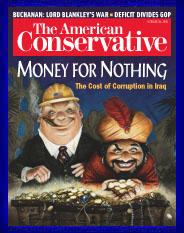
Thanks to A.E. for forwarding this devastating critique of corruption in occupied Iraq as published by The American Conservative Magazine. The author is a former CIA officer, but the research appears mainly to be from clippings. Never mind. Newsweek did an award-winning cover on "The $87 Billion-Dollar Money Pit" in December 2003, but it was overwhelmed in the news cycle a few days later when Saddam Hussein was pulled out of a hole by American forces. Remember when capturing Saddam was supposed to solve everything? As Giraldi points out, the enduring legacy of this occupation is corruption.

Money for Nothing: Billions of dollars have disappeared, gone to bribe Iraqis and line contractors’ pockets, by Philip Giraldi

The United States invaded Iraq with a high-minded mission: destroy dangerous weapons, bring democracy, and trigger a wave of reform across the Middle East. None of these have happened. When the final page is written on America’s catastrophic imperial venture, one word will dominate the explanation of U.S. failure—corruption. Large-scale and pervasive corruption meant that available resources could not be used to stabilize and secure Iraq in the early days of the Coalition Provisional Authority (CPA), when it was still possible to do so. Continuing corruption meant that the reconstruction of infrastructure never got underway, giving the Iraqi people little incentive to co-operate with the occupation. Ongoing corruption in arms procurement and defense spending means that Baghdad will never control a viable army while the Shi’ite and Kurdish militias will grow stronger and produce a divided Iraq in which constitutional guarantees will be irrelevant. ...

For more background, this is from July 2003:

$1 Billion a Week
And that’s on the low side. So much for a ‘self-sustaining’ reconstruction. Parsing the real cost for U.S. taxpayers

By Christopher Dickey
Newsweek
July 21, 2003.
ONE AFTERNOON HE was headed out on the highway to the Baghdad airport in a heavily protected convoy. Sen. Richard Lugar already had been warned that, on that road, “people get shot, there are fire fights.” Then the general with him suddenly ordered a machine gunner on top of a Humvee to get down. The reason: Iraqi killers are good at blindsiding American troops. “From time to time,” Lugar was told, “there are enemy, whoever they are, who sort of loop wires down from the bridges that might pluck somebody off at the neck as they go down the road.”
By the time Lugar’s trip to Iraq was over, the Indiana Republican worried the American people were being blindsided, too, by the true costs in blood and treasure of a war that has yet to end.
“This idea that we will be in [Iraq] ‘just as long as we need to and not a day more’,” he said, paraphrasing the administration line, “is rubbish! We’re going to be there a long time.” Lugar said he kept demanding answers about the cost to American taxpayers and was not quite getting them. “Where does the money come from?” he asked. “How is it to be disbursed, and by whom?”
Last week, at last, some of the answers started coming in, and they were grim. Defense Secretary Donald Rumsfeld told a hearing that the “burn rate” for American money to fund the military presence in Iraq was now $3.9 billion a month—almost $1 billion a week. “This is tough stuff,” said a cranky Rumsfeld, lecturing the Senate committee. “This is hard work. This takes time. We need to have some patience.” ...
http://foi.missouri.edu/terrorintelligence/1billion.html

Lebanon: The Usual Suspects

In the current edition of Newsweek, Kevin Peraino and I report that the strongest evidence in the Rafik Hariri murder case is to be found in the phone records analyzed by the United Nations commission investigating the bombing. What is not new is the thinly sourced accusation naming top Syrian officials. As the headlines on this February 19, 2005 issue of Al-Seyassah clearly demonstrate, within a week of the Valentine's Day bombing direct accusations were leveled against Asef Shawkat, Syrian intelligence chief and brother-in-law of President Bashar al-Assad, Gen. Bahjat Suleiman, who was head of internal security forces in the Syrian General Intelligence Directorate at the time; and Lebanon's Gen. Jamil Sayyed, who was Director of General Security in Beirut. (Thanks to my friend M.S. in Lebanon for passing along the scan of the front page.) Of course, there are other sensational names in the U.N. report, including and especially the Syrian president's brother, Maher al-Assad. But there's also a potential trap here, as UN-appointed investigator Detlev Mehlis apparently understands. The top Syrian figures in the report are implicated by only one anonymous witness, and Mehlis tried to get those names taken out of the copy released to the press. This has been depicted as an effort to protect the presumption of innocence. Perhaps. But it would also be protect Mehlis and the credibility of his report. If the testimony of that one witness cannot be substantiated and investigators have to dial back, then the whole inquiry could be discredited even though the documentary evidence makes the case against the Syrian intelligence services, as such, very clear indeed. - CD


Newsweek: They Dialed M For Murder, 23 Oct 2005
Phone records suggest assassins linked to Syria
By Christopher Dickey and Kevin Peraino, with Mark Hosenball and John Barry
http://www.msnbc.msn.com/id/9785752/site/newsweek/

Friday, October 21, 2005

Powell's Chief of Staff Speaks Out

Larry Wilkerson, Colin Powell's chief of staff at the State Department from 2002 to 2005, recently gave a critique of the Bush administration's administration that was as blunt as it could be. One brief excerpt:

When you cut the bureaucracy out of your decisions and then foist your decisions, more or less out of the blue, on that bureaucracy, you can’t expect that bureaucracy to carry your decision out very well. And furthermore, if you’re not prepared to stop the feuding elements in that bureaucracy as they carry out your decision, you’re courting disaster. And I would say that we have courted disaster in Iraq, in North Korea, in Iran. Generally with regard to domestic crises like Katrina, Rita – and I could go on back – we haven’t done very well on anything like that in a long time. And if something comes along that is truly serious, truly serious, something like a nuclear weapon going off in a major American city, or something like a major pandemic, you are going to see the ineptitude of this government in a way that will take you back to the Declaration of Independence. … Read in there what they say about the necessity of the people to throw off tyranny or to throw off ineptitude or to throw off that which is not doing what the people want it to do. And you’re talking about the potential for, I think, real dangerous times if we don’t get our act together.

Shadowland Audio: The Miller Affair

The latest Shadowland column, "Burning Questions," is now available as an audio presentation or a podcast.

Iraq: An Avian Flu Factor?

Just came across this interesting post from Laurie Garrett at The Council on Foreign Relations:

...The Department of Defense is working on at least two pandemic flu plans, but we are not aware of any that posit a domestic role for military personnel. On September 16 the Defense Intelligence Agency issued a pandemic flu assessment that finds the most likely scenario for H5N1 to be that “the virus continues to be transmitted among bird species with sporadic cases among humans,” offering no serious problems for the American people or military. DoD has no published plans for dealing with virulent influenza among active duty personnel, or for conducting wars on two fronts when a significant percentage of combat personnel are ailing. We find this particularly troubling in light of the fact that insurgents battling U.S. personnel both in Iraq and Afghanistan often include suicidal players for whom the threat of lethal influenza would not likely be a deterrent to their military operations. In effect, if 30% of U.S. frontline troops were down with virulent flu while the epidemic had no impact on insurgent activities, the virus could prove a decisive strategic factor. ...

http://www.cfr.org/publication/9018/avian_flu_update.html

Al-Qaeda: Pen Pals

Several analysts have called into question the authenticity of a supposed letter by Al Qaeda ideologue Ayman Zawahiri to Al-Qaeda-in-Iraq leader Abu Mussab Al-Zarqawi, suggesting that it is a Shiite forgery passed on to the Americans or a wholesale fabrication by one or another government agency in northern Virginia. The way President Bush tried to exploit it in his recent speech, and the fact that the text was posted by the U.S. Director of National Intelligence, certainly raises suspicions among conspiracy theorists. Here in Paris, scholar Gilles Kepel concedes, half joking, that it could be the work of any of his brighter graduate students, but he thinks that on the whole it seems genuine. (Gilles is the author, most recently, of "Al-Qaida dans le texte," a detailed study of radical Islamist ideology as written by Zawahiri and others, which is a perfect companion to Gilles's earlier books on fundamentalism and jihad that are available in English.) Whatever the provenance of the DNI version, The New Republic has presented its own text, which follows closely, but not quite precisely, the language of the original:

Postcard from the Edge
by T. A. Frank
Another letter from Zawahiri to Zarqawi.

In the name of God, praise be to God, and praise and blessings be upon the Messenger of God, his family, his co-workers, and his broker.

Dear Brother,
God only knows how much I would enjoy visiting you in Iraq. The only thing keeping me from packing my bags, donning a burqa, and slipping into a carrier sack on a westbound mule right now is that I'm tied up with promoting my latest book, Man Behind the Mosque: Faith, Community and Discourse in Post-Bunker-Buster Waziristan (334 pp., Madrassa Press, $28.95 Canadian). Did you happen to see me on "Charlie Rose"? I had you in mind when I sent in my threatening audiotape. ...